
Sometimes life changes before you have time to prepare.
One day, you’re a wife.
A mother.
A person with plans.
A person thinking about ordinary things.
And then you hear words that change everything:
“You have a brain tumor.”
At 36 years old, Dafi Shlanger received that diagnosis.
She was married and raising three children, ages four through nine.
Her memoir, Brain Surgeons Don’t Do Facelifts: A Woman’s Journey Through Brain Surgery, tells the story of facing brain surgery while trying to continue being a mother, wife, and person through an extraordinarily frightening period of her life.
📖 When Everything Changes in One Conversation
A serious neurological diagnosis can make the future feel uncertain.
Suddenly, ordinary questions become different.
What will happen?
Will I be okay?
What will surgery be like?
What will my family do?
What happens to my children?
What will life look like afterward?
These questions aren’t only medical.
They are deeply personal.
🧠 The Brain Is Part of Who We Are
The brain controls so many aspects of daily life.
Movement.
Speech.
Memory.
Personality.
Emotion.
Thinking.
Independence.
So when something happens to the brain, the fear can reach far beyond the physical body.
You may worry about losing abilities.
You may worry about becoming dependent on others.
You may worry about becoming a different person.
These fears can be difficult to explain.
💔 The Fear Before Surgery
Brain surgery carries a unique emotional weight.
There can be fear of anesthesia.
Fear of complications.
Fear of what surgeons may find.
Fear of what life will be like afterward.
And while you are processing those fears, life doesn’t necessarily stop.
Children still need breakfast.
Laundry still needs to be done.
People still need answers.
Bills still exist.
Families still need reassurance.
Dafi’s story captures that tension between a frightening medical reality and the ordinary responsibilities of family life.
👨👩👧 Being a Mother While Facing a Brain Tumor
One of the most meaningful parts of Dafi’s story is the family perspective.
She wasn’t facing brain surgery in isolation.
She was a mother.
Her children depended on her.
She had a husband.
She had a family life that suddenly had to accommodate a major medical crisis.
That can create a different kind of fear.
You aren’t only asking:
“Will I be okay?”
You may also be asking:
“Will my family be okay?”
😔 The Emotional Side of Illness
Serious illness can bring many emotions.
Fear.
Anger.
Sadness.
Confusion.
Hope.
Denial.
Gratitude.
Exhaustion.
Sometimes all of them can appear in the same day.
There isn’t a correct emotional response.
You don’t have to be positive every minute.
You don’t have to pretend you’re not scared.
Being frightened doesn’t mean you’re weak.
🏥 The Hospital Becomes Part of Your Story
For someone undergoing brain surgery, hospitals can become a world of their own.
Doctors.
Nurses.
Tests.
Scans.
Waiting rooms.
Medical terminology.
Appointments.
Questions.
More waiting.
It can feel like your identity has temporarily become “the patient.”
But you’re still a person.
A parent.
A partner.
A friend.
A human being with a life outside the hospital.
💭 What Happens After Surgery?
The end of surgery isn’t necessarily the end of the emotional journey.
Recovery can bring new questions.
What symptoms are normal?
What will take time?
What has changed?
What can I do now?
When will I feel like myself again?
For anyone facing neurological surgery, these questions can be overwhelming.
The experience of another person can sometimes provide a sense of companionship.
Not because their recovery will be identical.
But because someone else has walked through the fear.
🌱 Survival Is More Than Getting Through the Operation
Survival isn’t always one dramatic moment.
Sometimes survival is:
Getting out of bed.
Taking a shower.
Eating breakfast.
Going to an appointment.
Holding your child’s hand.
Taking another step.
Getting through another day.
Recovery can be made up of ordinary victories.
❤️ Family Can Become Part of Recovery
Support can look different for every family.
A spouse may take over responsibilities.
Children may need age-appropriate explanations.
Friends may bring meals.
Someone may drive you to appointments.
Someone may simply sit beside you.
Support doesn’t have to fix the situation.
Sometimes it simply means:
“You don’t have to go through this alone.”
🤝 Let People Help
One of the hardest things for independent people can be accepting help.
You may be used to taking care of everyone else.
Then suddenly, you’re the person who needs assistance.
That can be uncomfortable.
But needing help during recovery doesn’t make you less capable.
It makes you human.
🌻 Life After a Major Medical Crisis
A serious brain condition can change your perspective.
Things that once seemed urgent may become less important.
Small moments may become more meaningful.
A family meal.
A conversation.
A walk outside.
A child’s laugh.
A quiet morning.
Surviving a frightening experience can change the way you look at ordinary life.
💡 Hope Can Exist Alongside Fear
You don’t have to choose between being afraid and being hopeful.
Both can exist.
You can say:
“I’m scared.”
And also:
“I’m going to keep going.”
You can have difficult days and still have hope.
You can cry and still be strong.
You can need help and still be independent in many ways.
🧠 Brain Surgery Is Not the Same as Brain Injury
This distinction matters.
Dafi Shlanger’s memoir focuses on her experience with a brain tumor and brain surgery.
It is not a book specifically about traumatic brain injury.
But her story can still resonate with the broader brain-health community because it explores fear, neurological illness, recovery, family, identity, and adapting to an unexpected change in life.
💗 Love Love Brain Thoughts
Brain Surgeons Don’t Do Facelifts: A Woman’s Journey Through Brain Surgery is a deeply personal memoir about Dafi Shlanger’s experience after being diagnosed with a brain tumor at age 36 while raising three young children. The original AuthorHouse edition was published in 2008 and is 264 pages.
What stands out for Love Love Brain is the human side of neurological illness.
Behind every scan is a person.
Behind every diagnosis is a family.
Behind every surgery is a story.
And behind every recovery is a human being trying to understand what comes next.
Dafi’s story reminds us that neurological illness doesn’t happen in isolation.
It happens within families.
Within relationships.
Within ordinary lives.
For anyone facing a frightening diagnosis, memoirs like this can offer something that medical information cannot always provide:
The feeling that someone else understands what it is like to be afraid.
At Love Love Brain, we believe that stories matter.
They don’t provide a medical roadmap for everyone.
But they can provide companionship.
And sometimes, when you’re facing something frightening, knowing that another person has walked through a difficult path can make the road feel a little less lonely.
💬 We’d Love to Hear From You
Have you or someone you love ever faced a frightening neurological diagnosis?
What helped you get through the hardest moments?
Did family or friends play an important role in your recovery?
Share your experience in the comments.
Your story may help another person who is facing a difficult chapter of their own.
📖 Where to Find the Book
Brain Surgeons Don’t Do Facelifts: A Woman’s Journey Through Brain Surgery was published by AuthorHouse in 2008 and is listed at 264 pages for the paperback edition. An electronic edition was later released under the name Dafi Shanti.
🛒 Get the Book on Amazon
Love Love Brain may earn a small commission from qualifying purchases made through this link. This does not affect the price you pay.
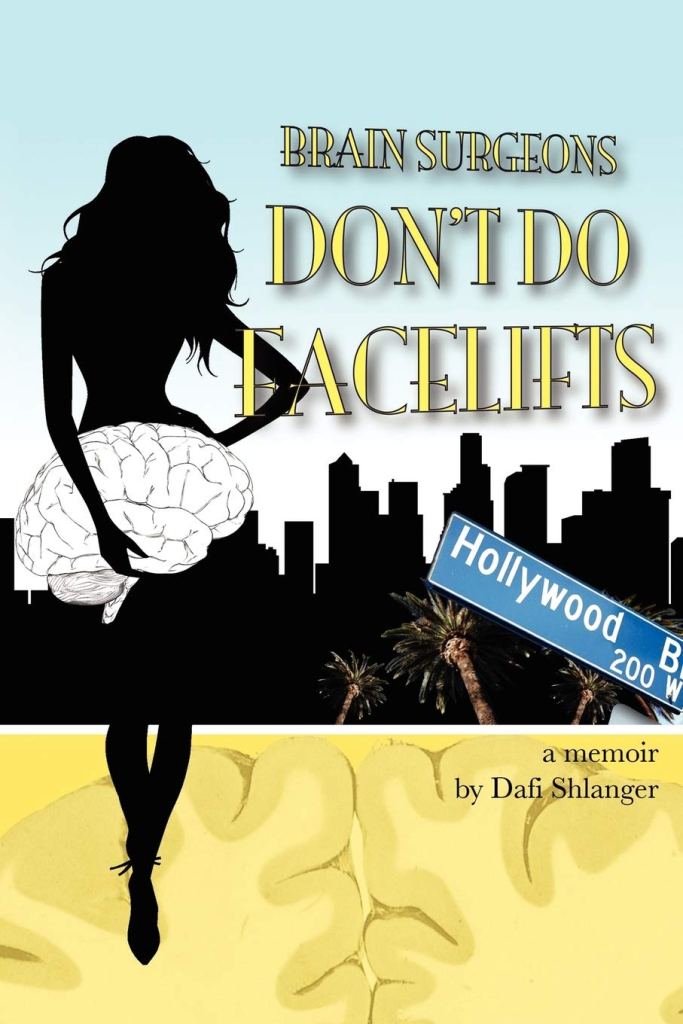
Book cover belongs to the publisher and is displayed for identification and review purposes.
Note: This book review is for informational and educational purposes only. It is not medical advice and should not replace guidance from a qualified healthcare professional. Every brain injury and recovery journey is different.


Do you Love Love YOUR Brain?