
What if the things you’ve spent years criticizing about yourself are not signs that you’re broken?
What if your brain simply works differently?
Maybe you’ve always struggled to finish things.
You lose track of time.
You forget why you walked into a room.
You have a hundred ideas at once.
You can become completely absorbed in something you love.
And then wonder why a simple task feels impossible.
For many women with ADHD, these experiences can lead to years of self-doubt.
“Why can’t I just be more organized?”
“Why can’t I focus?”
“Why am I so inconsistent?”
“Why can I do something one day but not the next?”
In ADHD for Smart Ass Women: How to Fall in Love with Your Neurodivergent Brain, Tracy Otsuka offers a different perspective.
Instead of focusing only on what ADHD makes difficult, she encourages women to understand their neurodivergent brains, recognize their strengths, and build lives that work with those brains rather than constantly fighting against them. (tracyotsuka.com)
📖 ADHD Doesn’t Always Look the Way People Expect
For a long time, ADHD was often associated with a stereotypical image of a young boy who couldn’t sit still.
But ADHD can look very different in women.
It may appear as:
🧠 Difficulty with attention
⏰ Time blindness
🗂️ Disorganization
💭 Racing thoughts
⚡ Inconsistent energy
❤️ Emotional intensity
😴 Problems with sleep
🎯 Hyperfocus
Because these experiences can be misunderstood, some women spend years believing their struggles are personal failures.
Otsuka specifically addresses the ways ADHD can present differently in women and how gaps in research have contributed to women being overlooked or misunderstood.
💔 When You Spend Years Blaming Yourself
Imagine knowing you’re intelligent.
Knowing you have ideas.
Knowing you are capable.
But still struggling to consistently do things that seem easy for everyone else.
That can be incredibly frustrating.
You may begin calling yourself:
Lazy.
Unmotivated.
Messy.
Forgetful.
Unreliable.
Too emotional.
Too much.
But what if those labels aren’t the whole story?
Sometimes the problem isn’t a lack of ability.
Sometimes the environment, expectations, or strategies simply aren’t compatible with the way your brain works.
🧠 Your Brain Is Not Broken
One of the most empowering ideas in Otsuka’s book is the invitation to stop seeing ADHD only through the lens of deficits.
She encourages women to identify their individual strengths and use those strengths intentionally.
That doesn’t mean ADHD doesn’t create real difficulties.
It does.
But difficulty and deficiency are not always the same thing.
You can struggle with organization and still be highly creative.
You can struggle with time management and still be deeply passionate.
You can have trouble focusing on boring tasks and become incredibly focused on something meaningful.
Your brain can have challenges and strengths.
💡 Find What Your Brain Does Well
Instead of asking only:
“How do I fix my ADHD?”
The book encourages another question:
“What does my brain do exceptionally well?”
Maybe you’re creative.
Maybe you’re curious.
Maybe you see connections other people miss.
Maybe you’re excellent at solving unusual problems.
Maybe you’re passionate.
Maybe you think differently.
Those qualities can become part of your strategy for building a meaningful life.
🎯 Motivation Matters
One of the challenges with ADHD is that knowing something needs to be done doesn’t always create enough motivation to actually do it.
You can know.
You can care.
You can want to.
And still struggle to begin.
That can be incredibly frustrating.
Instead of simply telling yourself to “try harder,” it can be useful to understand what makes a task interesting, meaningful, urgent, or rewarding for your particular brain.
⏰ Time Can Feel Different
Time blindness can make planning difficult.
You might think:
“I’ll do it later.”
Then suddenly realize three hours have passed.
Or you may underestimate how long something will take.
Or become completely absorbed in one activity and lose awareness of everything else.
External reminders can help.
Timers.
Calendars.
Visual schedules.
Alarms.
Written lists.
These aren’t signs that you’re incapable.
They’re tools.
🌱 Work With Your Brain
One of the strongest messages in the book is that you don’t necessarily need to force yourself into someone else’s definition of productivity.
Maybe your system needs to look different.
Maybe you work better in short bursts.
Maybe you need movement.
Maybe you need fewer distractions.
Maybe you need accountability.
Maybe you need to make boring tasks more interesting.
The goal isn’t to become someone else.
It is to understand yourself better.
❤️ Self-Acceptance Can Change Everything
Years of struggling can affect self-esteem.
You may start believing that you’re unreliable.
That you’re difficult.
That you don’t have enough discipline.
That you will never get your life together.
Self-understanding can begin to challenge those beliefs.
You can acknowledge your difficulties without turning them into judgments about your worth.
🤝 ADHD and Relationships
ADHD can affect relationships too.
Forgetting things can be interpreted as not caring.
Distractibility can be interpreted as disinterest.
Emotional intensity can create misunderstandings.
Time blindness can create frustration.
Learning how ADHD affects communication can help people have more compassionate conversations.
🧠 Why This Can Matter After Brain Injury
Although Otsuka’s book is specifically about ADHD rather than traumatic brain injury, some of the themes may resonate with people experiencing cognitive changes after TBI.
Attention.
Executive functioning.
Working memory.
Energy.
Emotional regulation.
Planning.
These areas can also be affected by brain injury.
But ADHD and TBI are not the same condition, and similarities in symptoms do not mean that one condition explains the other.
For survivors, the useful takeaway is simply that cognitive difficulties deserve understanding rather than shame.
🌻 Different Does Not Mean Less
A brain that works differently can still be a remarkable brain.
You may need different systems.
Different routines.
Different expectations.
Different ways of working.
That doesn’t make you less capable.
It means you’re learning what works for you.
💗 Love Love Brain Thoughts
ADHD for Smart Ass Women is an empowering guide for women who want to understand ADHD beyond the usual stereotypes.
Tracy Otsuka combines research, coaching experience, personal insight, and practical strategies to encourage women to recognize both the challenges and strengths associated with their neurodivergent brains.
For the Love Love Brain community, one message especially stands out:
Stop measuring your brain only by what it struggles to do.
This can be an important perspective after brain injury too.
A survivor may discover that certain abilities have changed.
That can be painful.
But the brain is more than its limitations.
You are more than your symptoms.
You are more than the things you need help with.
At Love Love Brain, we believe understanding your brain can be the beginning of greater self-compassion.
You don’t have to become the person you were before.
You don’t have to fit someone else’s definition of normal.
You can learn your brain.
Work with it.
Support it.
And build a life around what matters to you.
💬 We’d Love to Hear From You
Have you ever spent years thinking a brain-related difficulty was a personal failure?
Have you discovered a strategy that works better for your brain?
What is one strength you have learned to appreciate about yourself?
Share your experience in the comments.
Your story may help someone else see themselves differently.
📖 Where to Find the Book
ADHD for Smart Ass Women: How to Fall in Love with Your Neurodivergent Brain was published by HarperCollins/William Morrow in December 2023 and is approximately 288–302 pages depending on the edition.
🛒 Get the Book on Amazon
Love Love Brain may earn a small commission from qualifying purchases made through this link. This does not affect the price you pay.
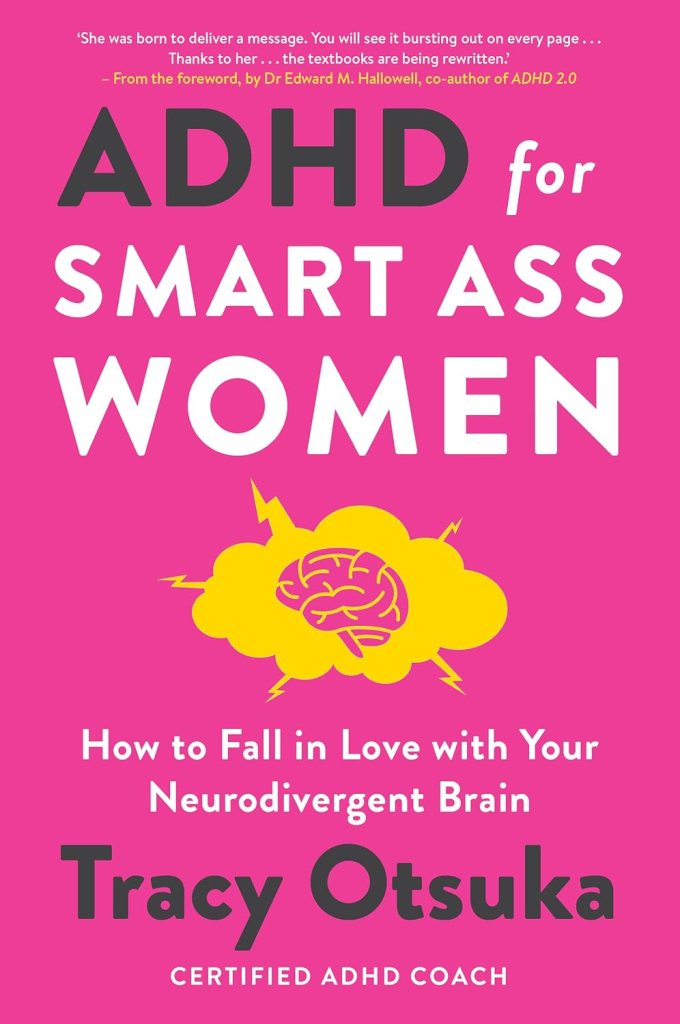
Book cover belongs to the publisher and is displayed for identification and review purposes.
Note: This book review is for informational and educational purposes only. It is not medical advice and should not replace guidance from a qualified healthcare professional. Every brain injury and recovery journey is different.


Do you Love Love YOUR Brain?