
What if finding more peace did not require changing your entire life?
What if it began with something much smaller – a thought, a pause, a breath, or a different way of looking at what is happening around you?
For Timber Hawkeye, Buddhism is not simply about meditation or following a particular religion. Buddhist Boot Camp presents mindfulness as a practical way of becoming more aware, compassionate, and peaceful in everyday life.
The book is a collection of journal entries and letters written over several years. Its chapters are intentionally short and can be read in any order, making it an approachable book for readers who want simple reflections rather than a complicated philosophical text.
📖 When You Need a Different Perspective
Life can sometimes feel overwhelming.
Especially when you are dealing with change.
After a brain injury, things that once seemed automatic may require more thought and energy.
Getting through the day can take planning.
Managing emotions can become harder.
And sometimes the smallest problem can feel much bigger than it would have before.
During those moments, a different perspective can be helpful.
Buddhist Boot Camp encourages readers to pause and examine the way they think about their experiences rather than automatically accepting every thought or reaction.
🧘 Training the Mind
The title may sound intense.
But the book is actually built around short, accessible reflections.
Hawkeye describes Buddhism as a form of training for the mind and presents teachings that readers can apply to everyday situations. The book is specifically described as non-sectarian, and readers do not need to identify as Buddhist to find value in its ideas.
The focus is not on becoming perfect.
It is about becoming more aware.
More aware of your thoughts.
More aware of your reactions.
More aware of how you treat yourself and others.
💭 Not Every Thought Needs Your Attention
Our minds can become very busy.
Especially when we are worried.
You might think:
“I should be doing more.”
“I should be further along.”
“Why can’t I do what I used to do?”
“Everyone else is moving forward.”
Those thoughts can feel completely true in the moment.
But mindfulness gives us an opportunity to pause.
We can notice the thought without immediately allowing it to control us.
Sometimes the most helpful thing we can say is:
“I am having this thought, but I don’t have to follow it.”
🌱 Small Changes Can Matter
Recovery does not always happen through one dramatic breakthrough.
Sometimes it happens through small changes.
Taking a break before becoming overwhelmed.
Practicing patience.
Letting go of unnecessary arguments.
Being kinder to yourself.
Learning to accept what you cannot control.
Choosing to respond instead of react.
These may seem like small things.
But small things repeated over time can become meaningful habits.
❤️ Compassion Begins With Ourselves
It can be easier to show compassion to someone else than to ourselves.
We may understand when another person needs to rest.
But criticize ourselves for doing the same.
We may forgive someone else for making a mistake.
But expect ourselves to get everything right.
Brain injury recovery can require a great deal of patience.
And that patience should include ourselves.
Being kind to yourself does not mean giving up.
It means recognizing that you are doing your best with the circumstances you have today.
🕊️ Finding Peace Without Having All the Answers
You do not have to understand everything before you can have a peaceful moment.
You do not have to know exactly what your future will look like.
You do not have to solve every problem today.
Sometimes peace can simply mean being present with what is happening right now.
A quiet morning.
A few deep breaths.
A walk outside.
A conversation with someone you trust.
A moment without pressure.
These ordinary moments can matter.
🌻 One Small Step at a Time
One of the things that makes Buddhist Boot Camp approachable is its short format.
The current English edition contains 160 pages, and the author’s website describes the book as a collection of eight years’ worth of journal entries and letters, with each chapter only a page long and readable in any order.
That can be useful when your attention, energy, or concentration changes from day to day.
You do not have to read everything at once.
You can read one page.
Think about it.
And come back tomorrow.
💗 Love Love Brain Thoughts
Buddhist Boot Camp offers simple reminders about mindfulness, compassion, perspective, and living more peacefully.
For brain injury survivors, these ideas can be especially meaningful during the difficult days.
Recovery can bring frustration.
It can bring uncertainty.
It can bring moments when you compare your current life to the life you had before.
But you do not have to solve everything at once.
Sometimes the next step is simply to pause.
Take a breath.
Notice where you are.
And ask:
“What do I need right now?”
At Love Love Brain, we believe recovery is not about rushing toward a finish line.
It is about learning how to move through life in a way that respects your brain, your energy, and your new reality.
One thought. One moment. One step at a time. 🌻
💬 We’d Love to Hear From You
What helps you find peace when your brain feels overwhelmed?
Do you practice mindfulness, meditation, or simply taking quiet moments for yourself?
What small reminder helps you get through a difficult day?
Share your experience in the comments.
Your story may help another survivor feel less alone.
📖 Where to Find the Book
If you’d like to learn more about Buddhist Boot Camp or purchase a copy, you can find it through Timber Hawkeye’s official website or major book retailers.
🛒 Get the Book on AMazon
Love Love Brain may earn a small commission from qualifying purchases made through an Amazon link. This does not affect the price you pay.
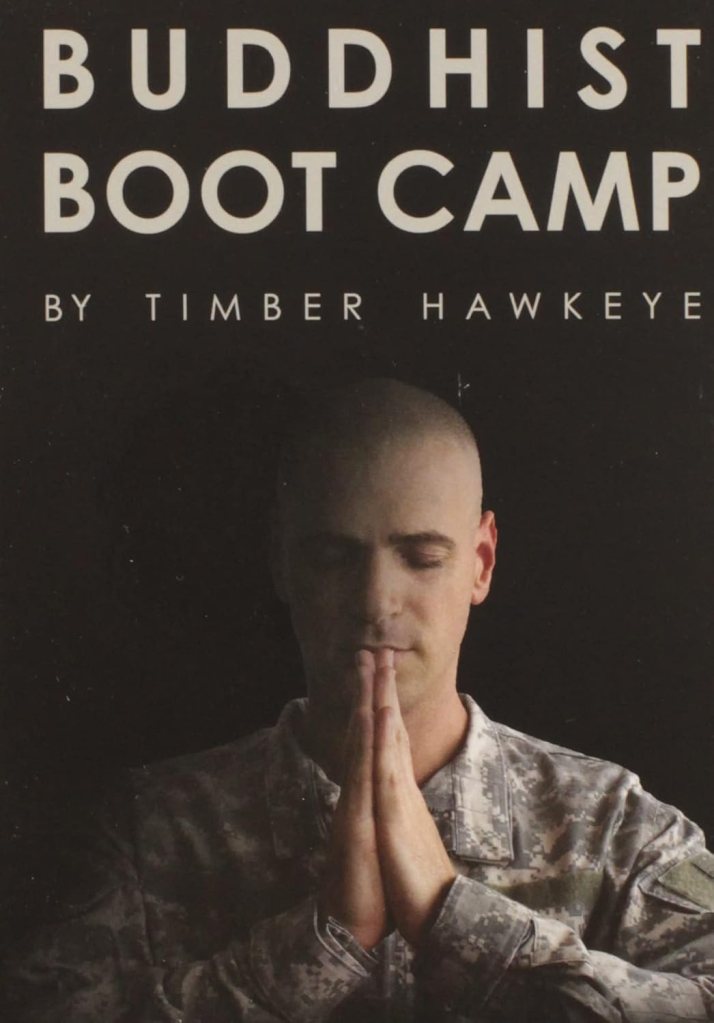
Book cover belongs to the publisher and is displayed for identification and review purposes


Do you Love Love YOUR Brain?