
What if taking care of your brain could also change the way you experience everyday life?
After a brain injury, happiness can sometimes feel complicated.
You may be grieving what you have lost.
You may be adjusting to new limitations.
You may be frustrated by things that used to be easy.
You may be wondering what your future will look like.
And sometimes you may simply be tired.
In Happy Brain, Happy Life: Everyday Neuroscience of Health, Wealth, and Love, Peter Hollins explores neuroscience through the lens of happiness, habits, stress, motivation, compassion, relationships, and everyday behavior.
The book was published in 2024 and is listed at approximately 196-198 pages depending on the edition. It aims to make neuroscience practical and accessible rather than something reserved for scientists.
For someone living with brain injury, some of these ideas can offer a different way of thinking about the brain.
Not only as something that was injured.
But also as something worth understanding and supporting.
🧠 Your Brain Is Part of Everyday Life
Your brain is involved in almost everything you do.
How you think.
How you remember.
How you respond to stress.
How you make decisions.
How you connect with other people.
How you form habits.
How you experience emotions.
When a brain injury changes some of these functions, everyday life can feel very different.
Things that once happened automatically may suddenly require planning.
That can be exhausting.
And it can also be frustrating.
🌱 The Brain Can Change
One of the concepts connected with the book is neuroplasticity.
The brain can adapt.
It can learn.
It can form and strengthen connections.
This can be an encouraging idea after brain injury.
But it is important to be realistic.
Neuroplasticity does not mean every injury can be reversed.
It does not mean that positive thinking can repair a damaged brain.
And it does not mean that recovery is completely within your control.
Instead, it reminds us that the brain is capable of change.
Small changes can still matter.
😌 Stress Can Affect How You Feel
Stress is one of the major topics explored in Happy Brain, Happy Life.
Hollins discusses how stress affects the brain and how different habits and behaviors may influence our experience of stress.
For people with brain injuries, this can be especially meaningful.
Your brain may already be working harder than before.
Then you add noise.
Crowds.
Deadlines.
Appointments.
Difficult conversations.
Too many decisions.
Suddenly, everything feels like too much.
Sometimes taking care of your brain means reducing the number of things demanding your attention.
💭 The Brain Tells Stories
The book explores the idea that the brain naturally uses stories to understand and process experiences.
Think about the stories you tell yourself after brain injury.
“I’m not who I used to be.”
“I can’t do anything anymore.”
“I’m a burden.”
“I should be further along.”
These thoughts can become powerful.
But a thought is not automatically a fact.
You can notice the story.
Then ask:
“Is there another way to understand what is happening?”
Maybe you are not lazy.
Maybe you are exhausted.
Maybe you are not failing.
Maybe you need more support.
Maybe your brain is asking you to do things differently.
🎯 Motivation Can Change
After brain injury, motivation can sometimes feel different.
You may know exactly what you want to accomplish.
But getting started feels impossible.
You may have a long list of things to do.
And no energy to begin.
The book explores the relationship between dopamine and goal-setting and looks at motivation through a neuroscience lens.
Sometimes a smaller goal can help.
Instead of:
“I have to get everything done.”
Try:
“What is one thing I can do right now?”
One email.
One phone call.
One shower.
One meal.
One short walk.
One page.
Small steps still count.
🤝 Humans Need Connection
The book also explores why humans are social animals.
Connection matters.
But socializing can become more difficult after brain injury.
Conversations can be tiring.
Crowds can be overwhelming.
Noise can make it harder to focus.
You may withdraw because explaining your injury feels exhausting.
But needing a quieter social life does not mean you no longer need people.
Connection can simply look different.
A short phone call.
A text.
A quiet visit.
A walk with someone you trust.
Sitting beside someone without talking.
Support does not have to be complicated.
💗 Compassion for Your Brain
The book explores the idea of compassion and its relationship with neuroplasticity.
This is especially meaningful after brain injury.
You may be patient with everyone else.
But hard on yourself.
You may tell a friend:
“It’s okay to rest.”
Then criticize yourself for doing the same thing.
You may understand that someone else is struggling.
But call yourself lazy when you struggle.
Try offering yourself the same kindness.
Your brain has been through something significant.
You deserve compassion too.
🌻 Happiness Does Not Mean Everything Is Easy
Being happy does not mean that you never feel sad.
It does not mean you stop grieving.
It does not mean you stop having difficult days.
You can be frustrated and still laugh.
You can miss your old life and still enjoy your current life.
You can need help and still be strong.
You can have symptoms and still experience joy.
Happiness can exist alongside recovery.
🧩 Building a Life That Works for Your Brain
Sometimes recovery means changing the way you live.
Maybe you need more breaks.
Maybe you need fewer commitments.
Maybe you need written reminders.
Maybe you need quiet mornings.
Maybe you need to say no more often.
These changes are not failures.
They are adaptations.
You are learning what your brain needs.
And that knowledge can become part of your new definition of success.
💡 Success Can Look Different Now
Before your injury, success may have meant productivity.
Working long hours.
Accomplishing more.
Being independent.
Doing everything yourself.
After brain injury, success may look different.
Getting through a difficult day.
Remembering an appointment.
Taking a needed rest.
Asking for help.
Finishing one task.
Showing up.
Trying again tomorrow.
A smaller life is not necessarily a lesser life.
🌻 Everyday Neuroscience Can Be Personal
One of the strengths of Happy Brain, Happy Life is its attempt to bring neuroscience into everyday experiences.
It discusses topics such as serotonin, stress, storytelling, compassion, dopamine, goal-setting, and social connection.
For people living with brain injury, these concepts can provide another way to understand some everyday experiences.
Not as a replacement for individualized medical care.
But as an opportunity to become more curious about your own brain.
💗 Love Love Brain Thoughts
Happy Brain, Happy Life explores the connection between neuroscience and everyday life, with a focus on happiness, stress, habits, motivation, compassion, and relationships.
For Love Love Brain, one of the most meaningful ideas is that brain health is about more than symptoms.
It is also about how you live.
How you rest.
How you connect.
How you manage stress.
How you set goals.
How you talk to yourself.
And how you define a meaningful life.
After brain injury, it can be easy to measure your life by what you have lost.
But another question is worth asking:
“What can I build from here?”
Maybe your life looks different now.
Maybe your priorities have changed.
Maybe happiness has become quieter.
Maybe success has become more personal.
That is okay.
You do not have to recreate your old life to have a meaningful life.
Your brain may have changed.
Your worth has not.
💬 We’d Love to Hear From You
What helps you feel happier and more balanced after brain injury?
Is it music?
Nature?
Movement?
Rest?
A favorite hobby?
Time with family?
A quiet morning?
What has changed about your definition of happiness since your brain injury?
Share your experience in the comments.
Your idea may become someone else’s helpful strategy.
📖 Where to Find the Book
Happy Brain, Happy Life: Everyday Neuroscience of Health, Wealth, and Love by Peter Hollins was published by PKCS Media in 2024. Editions are listed at approximately 196-198 pages.
🛒 Get the Book on Amazon
Love Love Brain may earn a small commission from qualifying purchases made through this link. This does not affect the price you pay.
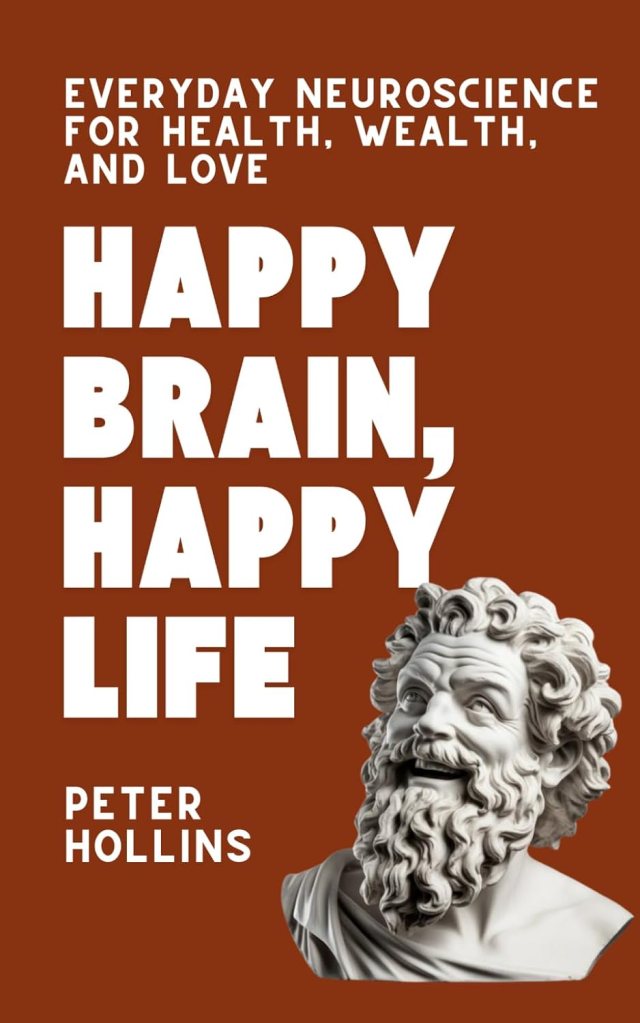
Book cover belongs to the publisher and is displayed for identification and review purposes.
Note: This book review is for informational and educational purposes only. It is not medical advice and should not replace guidance from a qualified healthcare professional. Every brain injury and recovery journey is different.


Do you Love Love YOUR Brain?