
Sometimes a brain injury changes your life in ways that other people cannot see.
You may look fine.
You may be walking.
You may be talking.
But inside, your brain may be working much harder than it used to.
You may struggle with headaches.
Memory problems.
Confusion.
Fatigue.
Difficulty concentrating.
Changes in mood or personality.
And sometimes, you may wonder:
“Why don’t I feel like myself anymore?”
“Why am I still having symptoms?”
“Why hasn’t my brain healed yet?”
In The Concussion Cure: 3 Proven Methods to Heal Your Brain, Paul Henry Wand, MD presents his approach to diagnosing and treating concussion and traumatic brain injury.
Published in 2019, the 180-page book discusses three treatment approaches: specific medication intended to increase blood flow in the brain, neurofeedback, and hyperbaric oxygen. Wand also discusses diagnostic testing and dietary supplements as part of his approach.
The book’s message is ultimately one of hope.
But hope works best when it is combined with careful questions, individualized medical care, and realistic expectations.
🧠 When a Concussion Doesn’t Look Like an Injury
A concussion may not leave a visible mark.
There may be no cast.
No wheelchair.
No obvious physical injury.
But that does not mean nothing happened.
You may be exhausted after a short conversation.
A grocery store may suddenly feel overwhelming.
Reading may require more effort.
You may forget why you walked into a room.
You may struggle to find a word.
You may need to sleep after doing something that once felt easy.
Invisible symptoms are still real symptoms.
💭 The Symptoms Other People Don’t See
One of the hardest parts of brain injury can be explaining your experience to people who cannot see it.
Someone may say:
“But you look fine.”
“You seem better.”
“Can’t you just push through?”
These comments can make recovery even harder.
You may begin questioning yourself.
You may wonder whether you should be doing more.
But your brain does not have to look injured for you to be experiencing real symptoms.
🔎 Understanding What Is Happening
Wand places significant emphasis on identifying functional abnormalities associated with concussion and discusses diagnostic testing as part of his approach.
For survivors, this can reinforce an important idea:
Your symptoms deserve attention.
You deserve to be able to talk about what you are experiencing.
You can write down your symptoms.
Track patterns.
Prepare questions before appointments.
Ask your healthcare provider what may be contributing to your difficulties.
And if you do not understand something, it is okay to ask for an explanation.
🧩 Three Treatment Approaches
The book focuses on three primary treatment approaches:
Medication.
Neurofeedback.
Hyperbaric oxygen.
Wand presents these as part of his treatment protocol for concussion and brain injury.
These approaches may sound promising.
But it is important to remember that a treatment described in a book is not automatically appropriate for every person.
Every brain injury is different.
Your medical history is different.
Your symptoms are different.
Your other medications and health conditions may also matter.
Treatment decisions should be made with a qualified healthcare professional who understands your individual situation.
🧠 Neurofeedback and the Brain
Neurofeedback is one of the approaches discussed in the book.
Wand describes using neurofeedback as part of his treatment protocol and connects it with the brain’s ability to change and adapt.
This brings us to an important concept:
Neuroplasticity.
The brain can change.
The brain can learn.
The brain can adapt.
But neuroplasticity does not mean that every injury can simply be reversed.
It is a reason for hope.
It is not a promise.
🌱 Recovery Can Take Time
There is no single concussion timeline.
Some people recover quickly.
Others experience symptoms for months.
Some people continue to have difficulties much longer.
That does not mean someone is trying harder than you.
It does not mean you are doing something wrong.
Brains are complicated.
Injuries are complicated.
Recovery is complicated.
You are allowed to need time.
💔 When You Miss Your Old Self
Brain injury can bring grief.
You may miss your energy.
Your independence.
Your ability to work.
Your social life.
Your concentration.
Your confidence.
You may miss the person you were before the injury.
That grief is real.
You do not have to pretend that everything is okay just because you are grateful to be alive.
Two things can be true.
You can be grateful.
And still grieve.
🌧️ Hope Should Not Become Pressure
Hope is important.
But sometimes messages about healing can accidentally create pressure.
If someone tells you that a treatment can change everything, you may start wondering what you are doing wrong if it doesn’t.
Please remember:
A treatment not working for you does not mean you failed.
Your recovery is not a test.
You do not have to prove that you are getting better.
🤝 Be Your Own Advocate
Learning about brain injury can help you become a better advocate for yourself.
Bring questions to appointments.
Keep notes.
Write down symptoms.
Ask about possible benefits and risks.
Ask what evidence supports a treatment.
Ask whether something is appropriate for your specific situation.
You do not have to understand everything immediately.
You are allowed to ask questions before making decisions about your care.
⚠️ A Thoughtful Approach to Treatment
The Concussion Cure presents strong claims about its treatment approaches.
Because this is a medical topic, readers should distinguish between the author’s treatment protocol and broader medical consensus.
Some treatments may be appropriate in certain circumstances and not others.
Some approaches may have limitations or mixed evidence.
And no book can evaluate your individual brain injury.
Use the information as a starting point for conversation with your healthcare team.
Hope and careful thinking can exist together.
🌻 After Brain Injury, Recovery Is More Than Treatment
Treatment can be an important part of recovery.
But recovery can also include rest.
Relationships.
Adaptation.
Finding new routines.
Learning how to manage energy.
Accepting help.
Finding meaningful activities.
Learning your limits.
And discovering what makes your life feel worthwhile again.
Your recovery is not only what happens inside a clinic.
It is also what happens in your everyday life.
💗 Love Love Brain Thoughts
The Concussion Cure focuses on Dr. Wand’s approach to diagnosing and treating concussion and brain injury, including three treatment modalities he presents as central to his protocol.
For Love Love Brain, one of the most meaningful ideas is the reminder that brain injuries can have effects that are difficult for other people to see.
You may look okay.
And still not feel okay.
You may be functioning.
And still be struggling.
You may be improving.
And still need help.
There is no contradiction in that.
We also believe that hope should come with compassion.
You can be hopeful about recovery without demanding that your brain heal on someone else’s schedule.
You can explore treatment options without feeling pressured to try everything.
You can ask questions.
You can seek another opinion.
You can take your time.
And you can remember that your worth is not measured by how quickly your symptoms disappear.
You are more than your concussion.
You are more than your symptoms.
And you are more than what your brain injury changed.
💬 We’d Love to Hear From You
Have you read The Concussion Cure?
Did the book change how you think about concussion or brain injury?
Have you found a treatment or strategy that has been helpful during your recovery?
What do you wish more people understood about invisible brain injury symptoms?
Share your experience in the comments.
Your story may help another survivor feel understood.
📖 Where to Find the Book
The Concussion Cure: 3 Proven Methods to Heal Your Brain by Paul Henry Wand, MD, was published in 2019 by Paul H Wand MDPA. The book is listed at 180 pages.
🛒 Get the Book on Amazon
Love Love Brain may earn a small commission from qualifying purchases made through this link. This does not affect the price you pay.
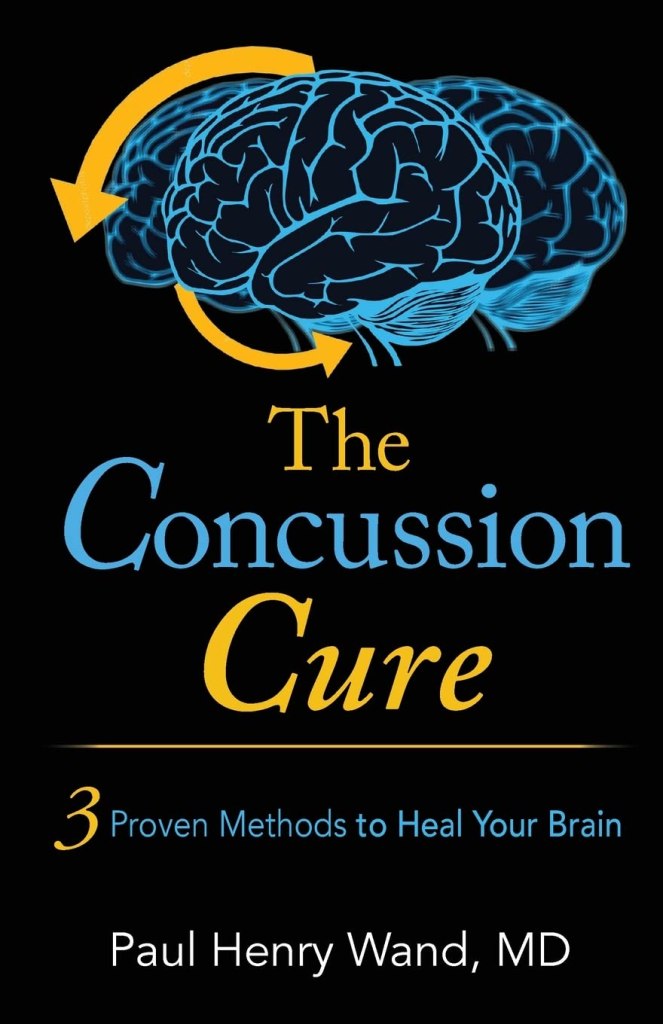
Book cover belongs to the publisher and is displayed for identification and review purposes.
Note: This book review is for informational and educational purposes only. It is not medical advice and should not replace guidance from a qualified healthcare professional. Every brain injury and recovery journey is different.


Do you Love Love YOUR Brain?