
Sometimes the hardest part of healing isn’t holding on.
It’s letting go.
Letting go of anger.
Letting go of fear.
Letting go of what you wish had happened differently.
Letting go of the person you thought you were supposed to become.
And sometimes, after a life-changing event, you may find yourself holding tightly to questions that have no easy answers.
“Why did this happen to me?”
“Why can’t I go back to how things were?”
“Why am I still angry?”
“Why can’t I just move on?”
In Letting Go: The Pathway of Surrender, David R. Hawkins, MD, PhD presents a spiritual and self-development approach to releasing emotional burdens and cultivating greater inner peace.
Hawkins draws on his background as a psychiatrist, clinician, spiritual teacher, and researcher of consciousness. The book describes what he calls a process of surrender as a way of working with difficult emotions.
📖 What Does It Mean to Let Go?
Letting go doesn’t necessarily mean forgetting.
It doesn’t mean saying that something didn’t matter.
It doesn’t mean pretending you weren’t hurt.
And it doesn’t mean accepting harmful behavior from other people.
Instead, the book encourages readers to change their relationship with difficult emotions.
Rather than constantly fighting against what we feel, we can learn to recognize and allow emotions to move through us.
💔 When Anger Becomes Exhausting
Anger can be powerful.
Sometimes anger protects us.
Sometimes it tells us that something mattered.
But holding onto anger for a long time can become exhausting.
You may replay the same situation.
Repeat the same conversation in your head.
Imagine what you should have said.
Wonder what would have happened if things had been different.
The event may have happened years ago.
But emotionally, you may still be living inside it.
🧠 Brain Injury Can Bring Difficult Emotions
After brain injury, people may experience grief.
Grief for lost abilities.
Grief for independence.
Grief for relationships.
Grief for work.
Grief for the person they thought they would become.
There may also be anger.
Fear.
Frustration.
Sadness.
These emotions don’t mean you aren’t grateful.
They mean something important happened to you.
🌧️ You Don’t Have to Rush Recovery
Sometimes people feel pressure to “move on.”
“You need to think positively.”
“Just be grateful.”
“Forget about it.”
But emotional recovery doesn’t work on command.
You may need time to process what happened.
Letting go should not become another deadline you have to meet.
💭 Feeling an Emotion Is Different From Being Controlled by It
One useful way to approach the book’s message is to distinguish between experiencing an emotion and automatically acting on it.
You can feel anger without hurting someone.
You can feel sadness without deciding that your life has no meaning.
You can feel fear without allowing fear to make every decision.
The emotion can be acknowledged without becoming your entire identity.
🌱 Surrender Is Not Giving Up
The word “surrender” can sound like defeat.
But Hawkins uses it differently.
His approach describes surrender as allowing ourselves to release resistance to difficult internal experiences rather than constantly fighting them.
That can be a subtle but powerful distinction.
Giving up says:
“Nothing matters.”
Surrender can instead mean:
“I don’t need to fight this feeling every second.”
❤️ Acceptance Does Not Mean Approval
This is especially important after trauma or brain injury.
Accepting that something happened does not mean saying it was okay.
You can accept reality while still wishing things had been different.
You can acknowledge what happened without approving of it.
You can grieve what was lost while still choosing to live.
🧩 The Things We Carry
Sometimes we carry emotional burdens for years.
A conversation.
A diagnosis.
A mistake.
A betrayal.
A loss.
A moment we wish we could change.
Carrying these experiences can become part of how we see ourselves.
Letting go asks us to consider:
“Do I still need to carry this in the same way?”
🧘 Creating Space Between You and the Emotion
When a difficult emotion appears, you can try noticing it.
“I am angry.”
“I am afraid.”
“I am grieving.”
Instead of:
“I am an angry person.”
“I am broken.”
“I will always feel this way.”
That small change in language can create distance between the emotion and your identity.
🌻 After Brain Injury, Identity Can Change
A brain injury can challenge the way you understand yourself.
You may have been independent.
Then you needed help.
You may have been highly productive.
Then fatigue changed your capacity.
You may have been socially active.
Then crowds became overwhelming.
You may have had a career you loved.
Then returning to work became complicated.
Letting go may sometimes involve releasing the expectation that life must look exactly as it did before.
💡 Make Room for What Comes Next
When we spend all our energy trying to recreate the past, there may be little room for the present.
What if the question changed from:
“How do I get my old life back?”
to:
“What can I build from where I am now?”
That doesn’t erase the past.
It simply creates space for the future.
🤝 Letting Go Can Be Gradual
You don’t have to release everything at once.
Maybe today you let go of one expectation.
Tomorrow, one old habit of self-criticism.
Another day, one painful belief about yourself.
Healing can happen in small pieces.
⚠️ Spiritual Ideas Are Not a Replacement for Care
Hawkins’ approach is spiritual and philosophical.
It can offer a meaningful framework for reflection.
But difficult emotions after trauma or brain injury may also require professional support.
Depression, anxiety, trauma symptoms, severe grief, or thoughts of self-harm deserve appropriate mental-health care.
You do not have to handle serious emotional suffering alone.
💗 Love Love Brain Thoughts
Letting Go presents David R. Hawkins’ approach to emotional release through what he describes as surrender. Drawing on his clinical psychiatric experience and spiritual framework, Hawkins explores how people can work with emotional burdens in everyday life and pursue greater inner peace.
For Love Love Brain, the idea of letting go can be particularly meaningful after brain injury.
There may be things you cannot change.
The injury happened.
The past happened.
Some abilities may have changed.
Some relationships may have changed.
Some dreams may have changed.
And grieving those changes is allowed.
But eventually, there may come a moment when you ask:
“What am I still carrying that is hurting me?”
Maybe it’s guilt.
Maybe it’s anger.
Maybe it’s the belief that you should be further along.
Maybe it’s the expectation that recovery must look a certain way.
Maybe it’s the idea that you have to become exactly who you were before.
Letting go doesn’t mean giving up on recovery.
It can mean releasing the pressure to control everything.
At Love Love Brain, we believe there is room for both acceptance and hope.
You can grieve what you’ve lost.
And still love the life you’re building now.
You can miss who you were.
And still discover who you are becoming.
Sometimes healing begins when we stop fighting ourselves.
💬 We’d Love to Hear From You
Is there something you have been learning to let go of during your recovery?
Has acceptance changed the way you think about your brain injury?
What helps you release anger, guilt, fear, or unrealistic expectations?
Share your experience in the comments.
Your story may help someone else take their next step forward.
📖 Where to Find the Book
Letting Go: The Pathway of Surrender is a self-development and spiritual book by David R. Hawkins, MD, PhD. Editions vary in length; the Hay House paperback edition published in 2014 is 400 pages.
🛒 Get the Book on Amazon
Love Love Brain may earn a small commission from qualifying purchases made through this link. This does not affect the price you pay.
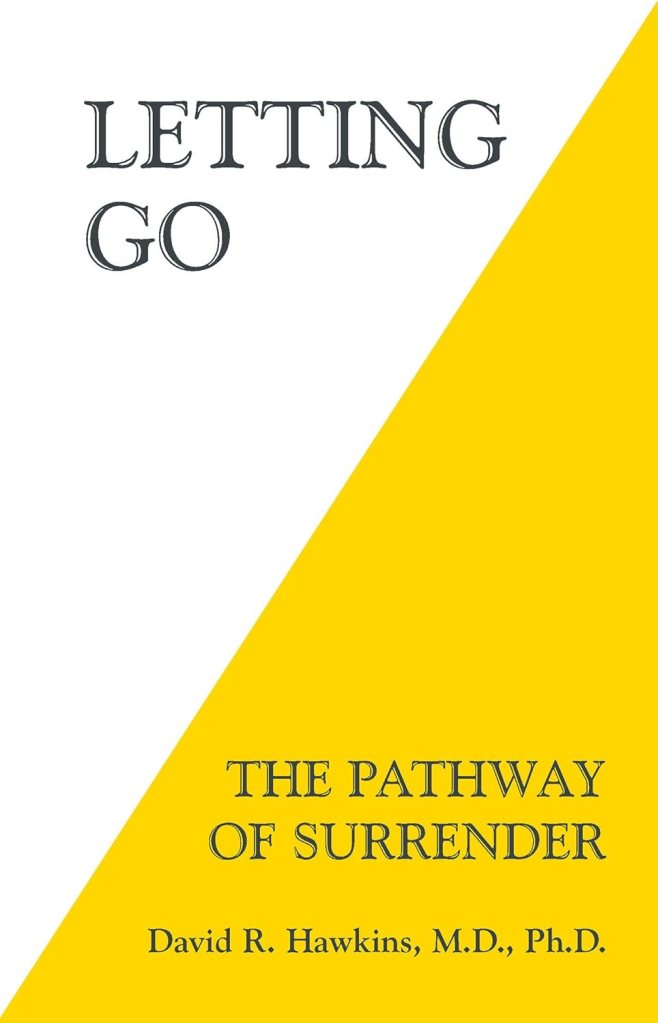
Book cover belongs to the publisher and is displayed for identification and review purposes.
Note: This book review is for informational and educational purposes only. It is not medical advice and should not replace guidance from a qualified healthcare professional. Every brain injury and recovery journey is different.


Do you Love Love YOUR Brain?