
A brain injury can change things that other people don’t immediately see.
Your memory may change.
Your mood may change.
Your sleep may change.
Your ability to concentrate may change.
Even your personality or behavior may feel different.
And sometimes the people around you don’t understand why.
They may think:
“Why are you acting like this?”
“Why can’t you remember?”
“You were fine before.”
But brain injury can affect the way the brain regulates many parts of everyday life.
The Traumatized Brain: A Family Guide to Understanding Mood, Memory, and Behavior after Brain Injury by Vani Rao, MBBS, MD, and Sandeep Vaishnavi, MD, PhD was written specifically to help patients and families understand these changes.
The authors are neuropsychiatrists with clinical expertise in helping people after brain trauma.
📖 Understanding What Happened to the Brain
A traumatic brain injury can result from many different events.
A car crash.
A fall.
A sports injury.
A workplace accident.
Domestic violence.
Combat.
The cause may be different, but the consequences can affect many areas of life.
The authors explain how mild, moderate, and severe TBI can affect the brain and how symptoms can continue after the initial injury.
🧠 The Brain Controls More Than We Realize
When we think about TBI, we often think about memory.
But the brain also regulates:
❤️ Emotions
😴 Sleep
🎯 Attention
🗂️ Planning
🗣️ Language
🧠 Decision-making
⚡ Impulse control
👀 Vision
That is why brain injury can affect so many parts of life.
💭 When Your Mood Changes
After TBI, emotional symptoms can be confusing.
A person may experience depression.
Anxiety.
Apathy.
Or other changes in mood.
The authors devote separate chapters to depression, anxiety, mania, and apathy, helping readers understand how these symptoms can relate to brain injury.
This can be especially important for families.
Instead of immediately asking:
“What’s wrong with you?”
They may begin asking:
“Could this be part of the injury?”
That question can change the conversation.
💔 When Behavior Changes
Brain injury can sometimes affect behavior.
Aggression.
Impulsivity.
Sleep disturbances.
Psychosis.
These symptoms can be frightening for both survivors and families.
The book addresses these behavioral changes directly and discusses treatment and coping strategies.
Understanding doesn’t excuse harmful behavior.
But understanding can help families respond more effectively.
🧠 Memory Is Only One Piece
The book also explores cognitive functions including:
🧠 Attention
💭 Memory
🗂️ Executive function
🗣️ Language
These skills are essential for everyday independence.
Executive function, for example, helps us organize, plan, prioritize, and complete tasks.
When those abilities are affected, ordinary responsibilities can become surprisingly difficult.
🛒 Why Simple Tasks Can Become Hard
Imagine needing to make dinner.
Before the injury, you might have done it automatically.
After the injury, you may need to:
Remember the ingredients.
Plan the steps.
Start the task.
Keep track of what you’re doing.
Avoid distractions.
Remember when something is cooking.
Finish the meal.
What looks like “making dinner” may actually involve many cognitive processes.
That’s why everyday tasks can become exhausting.
😴 Sleep Matters
Sleep disturbances are also discussed in the book.
Poor sleep can affect attention, mood, memory, and energy.
For a person with TBI, this can create a difficult cycle.
You sleep poorly.
You feel exhausted.
Your concentration gets worse.
Your mood becomes harder to manage.
And then the next night becomes difficult too.
Understanding sleep as part of the broader picture can help survivors and families recognize that it deserves attention.
🤕 Physical Symptoms Matter Too
The book addresses neurological symptoms such as headaches, seizures, and vision problems.
This matters because TBI is not purely psychological.
The symptoms can be physical, cognitive, emotional, and behavioral.
Sometimes several occur together.
🩺 Treatment Can Be Multidimensional
Because TBI affects different parts of life, treatment may involve different approaches.
The authors discuss medications, counseling, and other treatments, while each chapter includes practical coping suggestions.
This reinforces an important idea:
There is no single TBI treatment that fits everyone.
Care needs to be individualized.
🤝 Families Need Information
The title itself tells us who the book is intended to help.
Families.
Because when someone experiences a brain injury, everyone around them may be trying to understand what happened.
A spouse may wonder why communication has changed.
A parent may not understand a child’s behavior.
A caregiver may be unsure how much help to provide.
Information can reduce fear.
💗 When Someone Says, “This Isn’t Me”
A survivor may say:
“I don’t feel like myself.”
That statement deserves attention.
Brain injury can change how someone thinks, feels, behaves, and interacts with others.
But the injury doesn’t erase the person’s identity.
There is still a person underneath the symptoms.
A person who deserves dignity.
🌱 Recovery Is Possible, But It Takes Time
The book emphasizes understanding and assistance in helping people recover their functioning.
Recovery can take time.
Some symptoms improve.
Others may persist.
New strategies may help.
Support may change.
And the definition of recovery may evolve.
💡 Knowledge Can Restore Some Control
Brain injury can make you feel like you’re losing control.
Understanding what is happening can give some of that control back.
You can learn:
What your symptoms mean.
What questions to ask.
What patterns to watch.
What support you need.
What accommodations may help.
What resources are available.
Knowledge doesn’t fix everything.
But it can make the unknown less frightening.
🌻 You Are Not Alone
One of the most important messages in The Traumatized Brain is that symptoms are real and deserve to be understood.
The authors specifically aim to restore dignity to people with TBI and encourage them to seek help.
That message matters.
You are not making everything up.
You are not necessarily being difficult.
You are not failing because your brain works differently after an injury.
You are a person who experienced a brain injury.
And you deserve support.
💗 Love Love Brain Thoughts
The Traumatized Brain is one of the books on this list that is especially directly relevant to the Love Love Brain community.
Vani Rao and Sandeep Vaishnavi explain TBI from a neuropsychiatric perspective while covering mood, behavior, cognition, headaches, seizures, vision, and other symptoms. The book also includes case studies, coping tips, resources, and further reading.
What we appreciate most is the book’s emphasis on understanding.
Understanding why behavior may change.
Understanding why memory may become difficult.
Understanding why emotions may feel different.
Understanding why someone who looks fine may still be struggling.
For families, that understanding can create compassion.
For survivors, it can create validation.
And for both, it can create a starting point for better conversations and better support.
At Love Love Brain, we believe that education is a powerful form of advocacy.
When you understand your brain, you can better explain your needs.
When families understand TBI, they can better support survivors.
And when communities understand invisible disabilities, survivors don’t have to spend so much energy proving that their symptoms are real.
Your brain injury is real.
Your experience matters.
And you deserve to be understood.
💬 We’d Love to Hear From You
What is one symptom of brain injury you wish more people understood?
Has learning about TBI changed the way you understand yourself?
What do you wish your family or friends knew about your recovery?
Share your experience in the comments.
Your story may help another survivor feel seen.
📖 Where to Find the Book
The Traumatized Brain was published by Johns Hopkins University Press in 2015. The book is 224 pages and includes a glossary, resources, suggested reading, and an index.
🛒 Get the Book on Amazon
Love Love Brain may earn a small commission from qualifying purchases made through this link. This does not affect the price you pay.
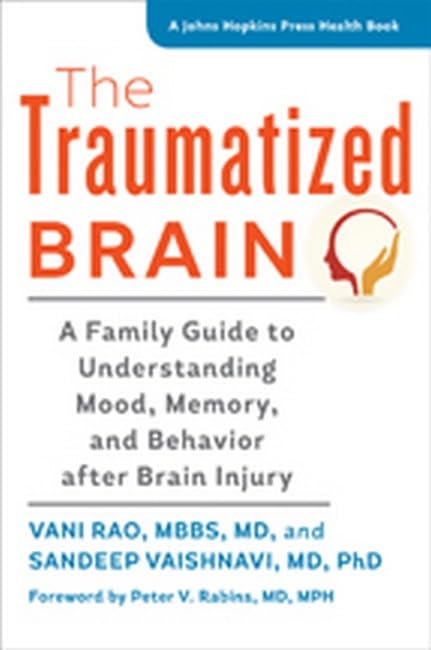
Book cover belongs to the publisher and is displayed for identification and review purposes.
Note: This book review is for informational and educational purposes only. It is not medical advice and should not replace guidance from a qualified healthcare professional. Every brain injury and recovery journey is different.


Do you Love Love YOUR Brain?