
Sometimes the hardest part of a concussion is realizing that it is not “just a concussion.”
You may expect to feel better after a few days.
Then the headaches continue.
The fatigue continues.
Your memory feels different.
Your sleep changes.
Your emotions feel harder to manage.
And you begin wondering:
“Why am I still struggling?”
“Why don’t other people understand?”
“When will I feel like myself again?”
In Coping with Concussion and Mild Traumatic Brain Injury: A Guide to Living with the Challenges Associated with Post Concussion Syndrome and Brain Trauma, Diane Roberts Stoler, Ed.D. and Barbara Albers Hill provide a comprehensive guide to understanding and living with concussion and mild traumatic brain injury.
Published in 2013, the book is 400 pages and covers symptoms, diagnosis, treatment approaches, physical and cognitive effects, emotional challenges, and practical strategies for living with post-concussion syndrome. Dr. Stoler is a neuropsychologist and concussion survivor.
For anyone who has felt lost after a concussion, the book offers something important:
You are not alone in what you are experiencing.
🧠 A “Mild” Brain Injury Can Still Be Life-Changing
The word “mild” can be confusing.
It does not necessarily mean your experience is mild.
A concussion can affect memory.
Attention.
Sleep.
Mood.
Balance.
Energy.
Vision.
Headaches.
And your ability to manage everyday life.
The book specifically addresses the symptoms and challenges that can continue after concussion, including what is often called post-concussion syndrome.
Your injury does not have to be classified as severe for it to have a major impact on your life.
💭 When People Think You Should Be Better
One of the most frustrating parts of concussion recovery can be other people’s expectations.
“But it was only a concussion.”
“You should be fine by now.”
“You look okay.”
“Can’t you just push through?”
You may start believing those messages yourself.
You may think you are weak.
Lazy.
Unmotivated.
Difficult.
But symptoms can affect how much energy your brain has available.
And pushing harder is not always the answer.
Sometimes your brain needs something different.
🤕 The Physical Symptoms Are Real
Concussion can affect the body in many ways.
The book discusses symptoms such as headaches, fatigue, sleep disturbances, dizziness, and imbalance.
These symptoms can affect almost everything.
Getting dressed.
Driving.
Working.
Shopping.
Cooking.
Reading.
Exercising.
Even having a conversation.
When several symptoms happen at once, everyday life can become exhausting.
🧠 Memory and Focus Can Change
Memory problems can be frightening.
You may forget appointments.
Lose your train of thought.
Walk into a room and forget why you went there.
Need reminders for things you used to remember automatically.
You may also struggle to concentrate for long periods.
The book focuses on improving memory and focus as part of helping people live with the effects of concussion and mTBI.
External supports can help.
Calendars.
Lists.
Phone reminders.
Written instructions.
Routine.
These tools do not mean you are incapable.
They mean you are supporting your brain.
😴 Fatigue Is More Than Being Tired
Brain injury fatigue can feel different from ordinary tiredness.
You may sleep and still feel exhausted.
A short conversation may drain you.
A trip to the store may require hours of recovery.
You may have enough energy for one task.
But not three.
Learning to recognize this difference can be important.
Your energy is a resource.
You are allowed to protect it.
🌧️ The Emotional Side of Concussion
A brain injury does not only affect thinking and physical functioning.
It can also affect emotions.
You may feel anxious.
Depressed.
Irritable.
Frustrated.
Overwhelmed.
You may have a shorter emotional fuse than you had before.
The book addresses emotional and psychological challenges associated with concussion and post-concussion syndrome.
These experiences can be difficult to explain.
But they deserve attention.
🛌 Sleep Matters
Sleep problems are another challenge discussed in the book.
When sleep is disrupted, everything else can become harder.
Concentration.
Memory.
Mood.
Energy.
Patience.
Daily functioning.
If your sleep has changed after a concussion, it is worth discussing with your healthcare team.
You do not have to simply accept poor sleep as part of your new normal.
🔎 Understanding Your Symptoms
One of the strengths of this book is how broadly it looks at concussion.
It does not focus on only one symptom.
It covers diagnosis and assessment, treatment approaches, physical symptoms, cognitive difficulties, and emotional challenges.
This can help readers understand why recovery can feel complicated.
There may not be one single problem.
There may be several things happening at the same time.
🧩 Recovery May Require More Than One Kind of Support
Concussion recovery can involve different types of care.
Medical care.
Rehabilitation.
Mental-health support.
Sleep support.
Cognitive strategies.
Family support.
Workplace accommodations.
The right combination depends on the individual.
There is no universal recovery plan.
Your care should fit your needs.
🤝 Family Members Need Support Too
Brain injury affects more than the person who was injured.
Families may not understand why someone who looks healthy needs so much rest.
Partners may struggle to understand changes in mood.
Parents may not know how much help is appropriate.
The book is described as a resource for patients, parents, and other caregivers.
Education can help families understand that recovery is not simply about trying harder.
🗓️ Learning How to Live Differently
Sometimes recovery means adapting your daily life.
Maybe you need more breaks.
Maybe you need to plan fewer activities in one day.
Maybe you need to avoid multitasking.
Maybe you need a quiet place to rest.
Maybe you need someone to help with certain responsibilities.
These changes can feel difficult at first.
But adapting is not giving up.
It is learning what works for your brain now.
🌱 Recovery Is Not a Straight Line
You may have a good week.
Then a difficult week.
You may feel like you are improving.
Then suddenly experience a setback.
This can be discouraging.
But recovery does not always move in a straight line.
A difficult day does not erase your progress.
Needing rest does not mean you are going backward.
Sometimes your brain simply needs more time.
💗 Love Love Brain Thoughts
Coping with Concussion and Mild Traumatic Brain Injury is an in-depth guide to the many challenges that can follow concussion and mTBI. It covers symptoms such as headaches, fatigue, sleep problems, dizziness, memory difficulties, and emotional challenges, while also discussing diagnosis, treatment approaches, and practical ways of living with post-concussion symptoms.
For Love Love Brain, this book’s greatest value is its reminder that a concussion can affect much more than the moment of injury.
The injury may have happened in seconds.
But the recovery can take much longer.
And during that recovery, you may have to learn things you never expected to learn.
How to manage your energy.
How to remember things differently.
How to ask for help.
How to explain your symptoms.
How to set boundaries.
How to accept that your brain needs more rest.
How to build a life around your current abilities instead of constantly comparing yourself with the past.
You may not be able to control everything about your recovery.
But you can learn more about your brain.
You can ask questions.
You can build support.
You can adapt.
And you can stop judging yourself for needing to do things differently.
A mild brain injury can still be a major life experience.
And needing help does not make you weak.
💬 We’d Love to Hear From You
Have you read Coping with Concussion and Mild Traumatic Brain Injury?
What symptom has been the most difficult for you to manage?
Memory?
Fatigue?
Headaches?
Sleep?
Mood?
Concentration?
What strategy has helped you most?
Share your experience in the comments.
Your experience may help another survivor understand that they are not alone.
📖 Where to Find the Book
Coping with Concussion and Mild Traumatic Brain Injury: A Guide to Living with the Challenges Associated with Post Concussion Syndrome and Brain Trauma by Diane Roberts Stoler, Ed.D. and Barbara Albers Hill was published by Avery in 2013. The paperback edition is listed at 400 pages.
🛒 Get the Book on Amazon
Love Love Brain may earn a small commission from qualifying purchases made through this link. This does not affect the price you pay.
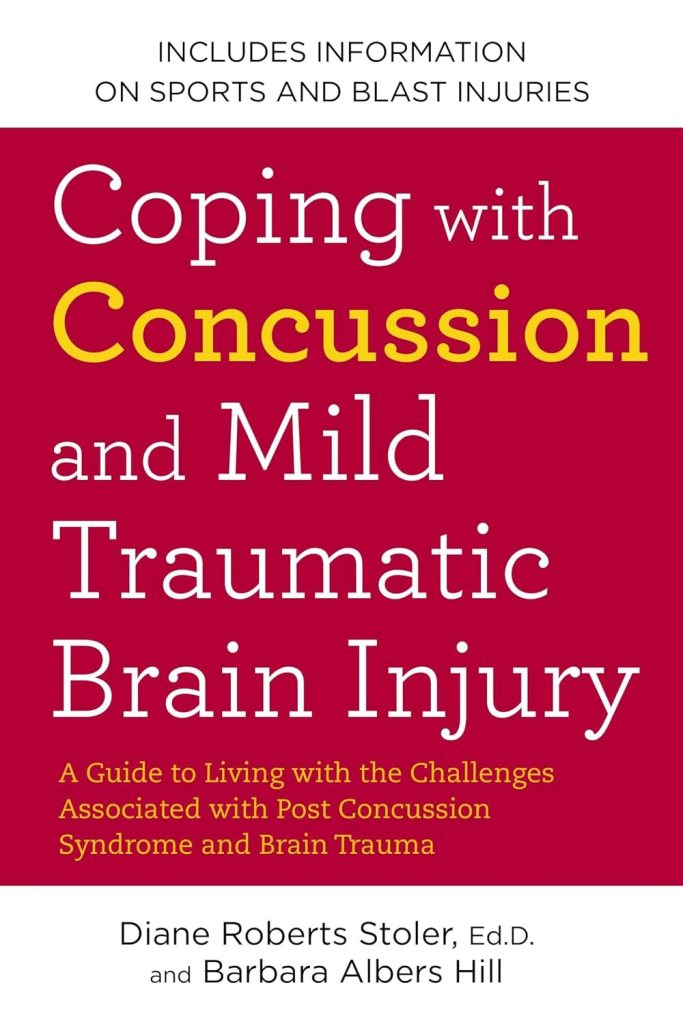
Book cover belongs to the publisher and is displayed for identification and review purposes.
Note: This book review is for informational and educational purposes only. It is not medical advice and should not replace guidance from a qualified healthcare professional. Every brain injury and recovery journey is different.


Do you Love Love YOUR Brain?