
For many people, the day begins with a reasonably full tank.
You wake up.
You get out of bed.
You brush your teeth.
You get dressed.
You make breakfast.
You start your day.
Of course, that can change when you’re sick, haven’t slept well, or are dealing with pain or stress.
But for many people living with a brain injury, starting the day with limited energy can be part of everyday life.
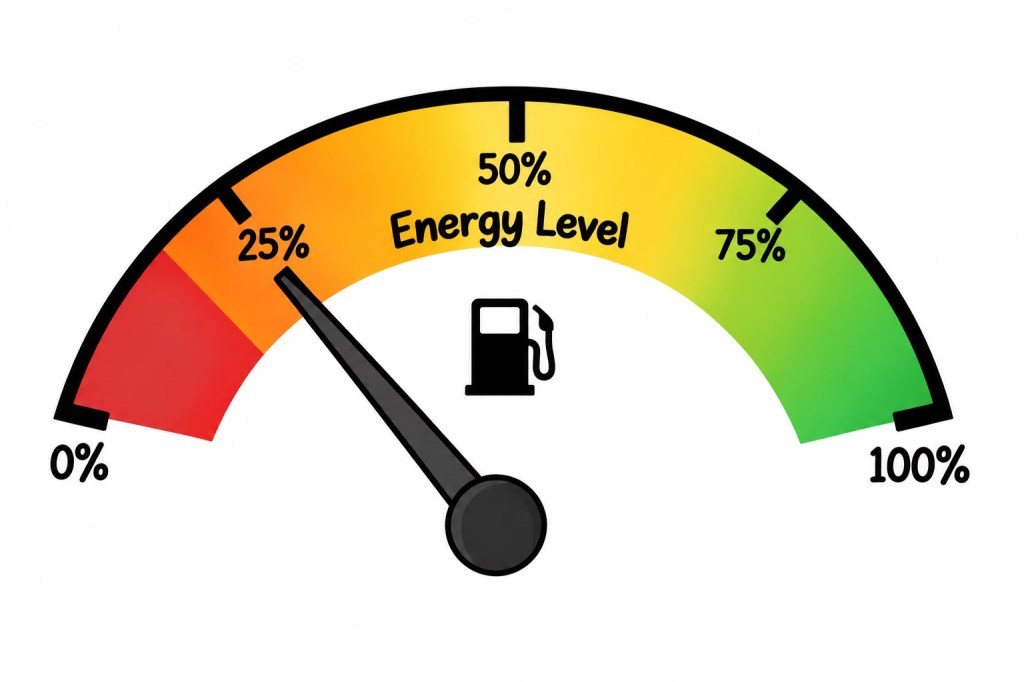
🔋 What If You Wake Up With Only 25%?
Imagine waking up and your internal battery is already sitting at 25%.
You haven’t done anything wrong.
You haven’t been lazy.
You haven’t wasted your energy.
You simply woke up with less available to you.
And yet, the day still expects things from you.
You need to get out of bed.
You need to use the bathroom.
You need to brush your teeth.
You may need to take medication, prepare food, answer messages, attend appointments, care for children, go to work, or manage a household.
And you’ve already used some of your energy just getting started.
That is a very different way to experience a normal day.
🧠 Brain Injury Can Make Everyday Things Expensive
Things that look simple from the outside can require a surprising amount of energy after brain injury.
Getting dressed might require decisions.
A conversation might require intense concentration.
Going to the grocery store might mean dealing with lights, sounds, people, movement, and countless choices.
Even getting ready to leave the house can feel like a major task.
What looks like a small activity to someone else may be a significant energy expense for someone with a brain injury.
That’s why comparing your energy to someone else’s isn’t always helpful.
You are working with the battery you have.
💗 Low Energy Does Not Mean Low Effort
This is an important distinction.
Someone who has very little energy may actually be working incredibly hard.
They may be using every bit of their available capacity just to get through ordinary activities.
So when a brain injury survivor says:
“I’m tired.”
It may mean much more than needing a nap.
It may mean:
“My brain has been working hard all day.”
“Everything is taking more effort than it used to.”
“I need a break before I completely run out.”
Listening to that message matters.
🌱 We Need to Be Treated With Care
When someone starts the day with a lower battery, they may need more patience and understanding.
That doesn’t mean treating a person as helpless.
It means recognizing their reality.
Sometimes the most supportive thing you can say is:
“Take your time.”
“You don’t have to do everything today.”
“What can I help with?”
“Let’s take a break.”
Those simple words can remove pressure from an already overloaded brain.
🛑 Don’t Wait Until the Battery Hits Zero
One of the biggest lessons in brain injury recovery is learning to recognize your limits before you completely crash.
If you wait until your battery reaches zero, recovery can take much longer.
Instead, pay attention to the warning signs.
Maybe you become irritable.
Maybe your thinking gets slower.
Maybe noise suddenly feels unbearable.
Maybe you can’t find the words you want.
Maybe your body feels heavy.
Maybe you want to withdraw from everyone.
These can be signals that your battery is getting low.
That’s when it’s time to recharge, not when you’re already empty.
🔋 Protect Your 25%
If you wake up with limited energy, you don’t have to spend it all proving what you can do.
Choose what matters most.
Save energy where you can.
Ask for help.
Take breaks.
Simplify your routines.
Give yourself extra time.
And remember that some days your battery may be higher or lower than others.
Your energy level is not a measure of your worth.
💗 Your Day Does Not Have to Look Like Everyone Else’s
Maybe someone else can accomplish ten things before lunch.
Maybe you can accomplish three.
That doesn’t mean their day is more valuable.
Maybe today, getting dressed, eating breakfast, taking a shower, and making one important phone call is enough.
Tomorrow may be different.
Recovery is not about forcing yourself to operate at 100% every day.
It is about learning how to work with the energy you have.
If you wake up at 25%, you deserve compassion at 25%.
You deserve patience.
You deserve support.
You deserve rest.
And you deserve to be understood.
⚠️ Love Love Brain Note
Every brain injury is different. The experiences and ideas discussed in this post are for educational and supportive purposes only and are not medical advice or a substitute for individualized care from qualified healthcare professionals. If you are experiencing new, severe, worsening, or concerning symptoms, seek appropriate medical care.


Do you Love Love YOUR Brain?