
What do you hope for?
Maybe you hope to feel more like yourself again.
Maybe you hope for more energy, more independence, or more peaceful days.
Or maybe, after a brain injury, your biggest hope is simply to have a good day.
Hope can become complicated after a brain injury.
You may have dreams for your future while also learning to adjust to changes you never expected.
Some days may feel full of possibility.
Other days may feel much harder.
Ask and It Is Given: Learning to Manifest Your Desires by Esther Hicks and Jerry Hicks explores thoughts, emotions, desires, and the idea that we can intentionally focus our attention toward what we want rather than remaining focused on what we do not want.
The book presents the teachings of Abraham and its law-of-attraction framework.
This is not a book about traumatic brain injury, and its ideas should not be understood as a treatment for TBI.
But some of its themes can still open an interesting conversation about hope, perspective, and finding meaning while adapting to life after brain injury.
🧠 When Your Future Feels Uncertain
Brain injury can change the way you imagine the future.
Before an injury, you may have had a clear picture of where your life was going.
Afterward, you may have questions instead.
Will I be able to work again?
Will I be able to do the things I used to enjoy?
Will my relationships change?
Will I ever feel like myself again?
There may not always be immediate answers.
That uncertainty can be exhausting.
One thing Ask and It Is Given: Learning to Manifest Your Desires encourages readers to consider is what they would like to move toward.
Instead of only asking, “What’s wrong?”
You might also ask:
“What would I like my life to feel like?”
That question does not erase the challenges.
It simply creates room for possibility.
💭 Giving Yourself Permission to Hope
After a difficult experience, it can sometimes feel safer not to hope too much.
You may worry about being disappointed.
You may have learned to lower your expectations because recovery has not happened the way you imagined.
But hope does not have to mean pretending everything is fine.
Hope can simply mean believing that tomorrow may contain something different from today.
Maybe you hope for more independence.
Maybe you hope to discover a new routine.
Maybe you hope to laugh more.
Maybe you hope to find people who understand what you are going through.
Those hopes are allowed to exist alongside the difficult parts of recovery.
❤️ Your Feelings Matter
A major theme in Ask and It Is Given: Learning to Manifest Your Desires is paying attention to how you feel.
For someone living with brain injury, learning to notice emotions can be useful without needing to accept every claim about why those emotions happen.
You might notice:
“I’m exhausted.”
“I’m frustrated.”
“I’m scared.”
“I’m hopeful today.”
“I need some quiet.”
Simply noticing what you are feeling can help you understand what you may need in that moment.
Your emotions do not have to be judged as good or bad.
They can simply be noticed.
🌱 Focus on What You Can Control
Life after brain injury can include many things that are outside your control.
You cannot always control your symptoms.
You cannot control how quickly your recovery happens.
You cannot control whether other people understand your experience.
And you cannot always control how your brain feels from one day to another.
But there may still be small things you can influence.
You can choose how you speak to yourself.
You can ask for help.
You can rest when you need to.
You can celebrate progress.
You can decide what matters most to you.
You can look for moments of connection and joy.
Sometimes focusing on these smaller areas of control can make a difficult situation feel a little more manageable.
🌸 You Are Allowed to Want More
Brain injury can sometimes make people feel as though they have to shrink their dreams.
Perhaps something you wanted before your injury now feels impossible.
Or perhaps your goals need to look different than they once did.
That does not mean you have to stop dreaming.
Your dreams may change.
Your timeline may change.
The path may change.
But you can still ask yourself:
What matters to me now?
Maybe your dream is no longer about returning to exactly who you were.
Maybe it is about discovering who you are becoming.
🕊️ A Different Way of Looking at Recovery
Ask and It Is Given: Learning to Manifest Your Desires encourages readers to pay attention to the thoughts and ideas they repeatedly focus on.
For a brain injury survivor, this can be approached gently.
You do not have to force yourself to “think positive.”
You do not have to pretend that difficult symptoms do not exist.
And you should never blame yourself for having a brain injury or for experiencing setbacks.
Instead, you might experiment with giving some attention to thoughts that feel supportive.
Instead of:
“I can’t do anything anymore.”
You might try:
“What is one thing I can do today?”
Instead of:
“My life will never be good again.”
You might ask:
“What could make today a little better?”
These are not magical solutions.
They are simply different questions.
🌻 Small Moments of Good Still Count
Sometimes recovery can make us focus on the big things.
Getting back to work.
Returning to a favorite activity.
Feeling completely like yourself again.
But there can also be smaller victories.
Getting through a difficult day.
Taking a walk.
Having a meaningful conversation.
Laughing with someone you love.
Getting enough rest.
Trying something new.
Finding a moment when your brain feels peaceful.
These moments deserve attention too.
A good day does not have to be a perfect day.
🧩 Your Recovery Is Your Own
It is important to remember that every brain injury is different.
There is no single recovery timeline.
There is no single definition of progress.
And there is no requirement to follow the same path as someone else.
Some people may connect deeply with the spiritual ideas in Ask and It Is Given: Learning to Manifest Your Desires.
Others may not.
You can take what feels meaningful to you while keeping a clear distinction between spiritual beliefs and medical evidence.
Your medical care should still be guided by qualified healthcare professionals.
And your recovery should never be reduced to whether you were able to “think positively” enough.
🤍 Hope Without Blame
This distinction is especially important when reading books about manifestation.
It can be comforting to focus on hope, possibility, gratitude, and the things we want to create in our lives.
But having difficult thoughts does not cause a brain injury.
And thinking positively cannot guarantee physical recovery.
Brain injuries are complex medical conditions.
If recovery is difficult, that does not mean you failed to manifest the right outcome.
You are not to blame for your symptoms.
You are not to blame for a difficult day.
And you do not have to force yourself to be positive every moment.
You are allowed to be honest about how hard things can be while still holding onto hope.
💗 Love Love Brain Thoughts
Ask and It Is Given: Learning to Manifest Your Desires is a spiritual and self-help book rather than a book about brain injury. Its teachings about manifestation and the law of attraction are presented as the authors’ spiritual framework, not as medical treatment.
For the Love Love Brain community, we find the most useful connection in the book’s invitation to think about what we want our lives to move toward. After brain injury, it can be easy for the mind to become consumed by everything that has changed. Making room for hope, meaningful goals, gratitude, and small moments of possibility can offer another way to look at the road ahead.
Most importantly, we believe hope should come without blame. You can hope for healing without believing that your thoughts control your medical outcome. You can have difficult emotions without feeling that you are doing recovery “wrong.” And you can dream about your future while honoring the reality of where you are today.
💬 We’d Love to Hear From You
Has your idea of hope changed since your brain injury?
What is something you are still hoping for?
Have your dreams changed since your injury?
What is one small thing that brings you joy or gives you hope?
And what helps you stay hopeful on the difficult days?
We’d love to hear your story.
📖 Where to Find the Book
Ask and It Is Given: Learning to Manifest Your Desires by Esther Hicks and Jerry Hicks is available through major bookstores and online retailers. Readers can explore the book in different formats depending on their preferences and accessibility needs.
If reading for long periods is difficult after brain injury, you may also want to explore whether an audiobook or digital edition works better for you.
🛒 Get the Book on Amazon
Love Love Brain may earn a small commission from qualifying purchases made through our Amazon affiliate links. This comes at no additional cost to you and helps support our work.
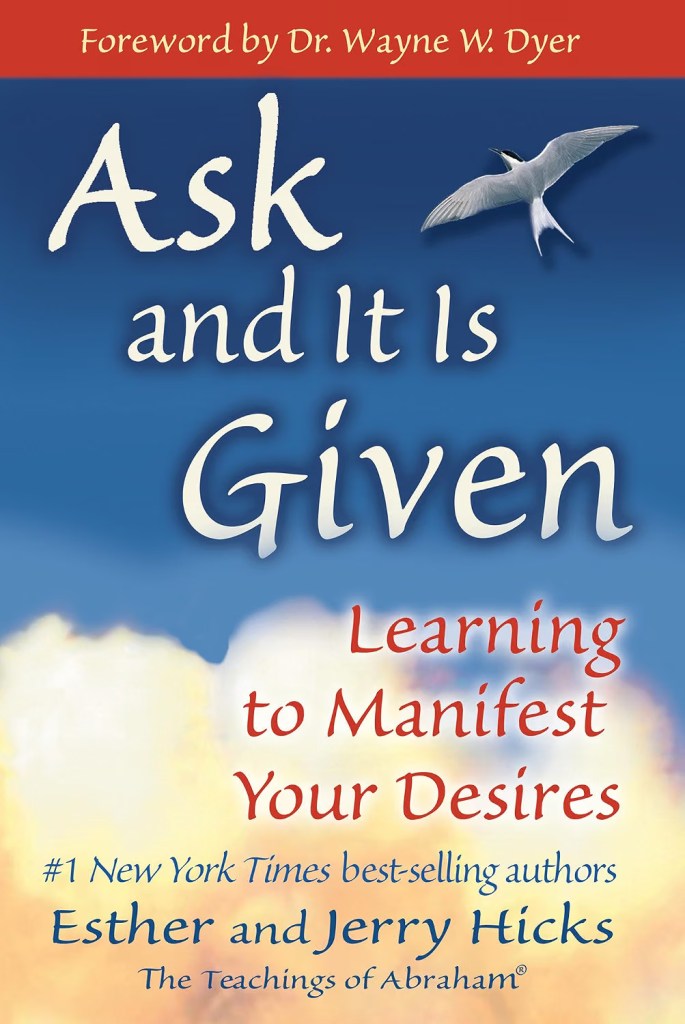
Book covers are shown for identification purposes and remain the property of their respective publishers and authors.
Note: This book review is for informational and educational purposes only. It is not medical advice and should not replace guidance from a qualified healthcare professional. Every brain injury and recovery journey is different.


Do you Love Love YOUR Brain?