
Have you ever had a day when your emotions seemed bigger than you expected?
Maybe you felt frustrated because something that used to be easy suddenly took much more effort.
Maybe you felt sad about the things that changed after your brain injury.
Maybe you felt hopeful one moment and overwhelmed the next.
Life after brain injury can bring a wide range of emotions.
And sometimes, it can be difficult to understand what those feelings are trying to tell you.
The Astonishing Power of Emotions by Esther Hicks and Jerry Hicks explores emotions, thoughts, and the relationship between how we feel and what we focus our attention on.
The book is based on the authors’ teachings of Abraham and their Law of Attraction framework.
This is not a book about traumatic brain injury, and its ideas should not be considered a treatment for TBI.
But for someone living with brain injury, the book can open up a meaningful conversation about noticing emotions, understanding what you need, and making room for hope without blaming yourself for difficult days.
🧠 Your Emotions May Feel Different After Brain Injury
A brain injury can change many parts of everyday life.
You may experience fatigue.
You may become overwhelmed more easily.
You may find that certain situations affect you differently than they did before.
You may also experience emotions that feel stronger or harder to manage.
That can be confusing.
You might wonder:
“Why am I reacting this way?”
“Why does this bother me so much now?”
“Why can’t I just get over it?”
Instead of criticizing yourself, you might begin by simply noticing what you are experiencing.
Something is happening inside me right now.
That awareness can be a gentle first step.
❤️ Your Feelings Deserve Attention
One of the central themes of The Astonishing Power of Emotions is paying attention to how you feel.
For someone recovering from brain injury, this can be a helpful practice when approached carefully.
You might notice:
“I’m exhausted.”
“I’m angry.”
“I’m anxious.”
“I’m lonely.”
“I’m hopeful.”
“I need a break.”
You do not have to immediately fix the feeling.
Sometimes you can simply acknowledge it.
Your feelings are part of your experience.
They deserve to be noticed rather than pushed away or criticized.
🌊 Emotions Can Be Information
After brain injury, your emotions may sometimes help you notice that something in your environment or routine is becoming too much.
Maybe the room is too noisy.
Maybe you have been concentrating for too long.
Maybe you have taken on too many tasks.
Maybe you need food, water, rest, or quiet.
Maybe a conversation has become emotionally exhausting.
Learning to pause and ask “What do I need right now?” can be useful.
This does not mean every emotion has a single hidden message.
It simply means that paying attention can help you better understand your experience.
💭 You Do Not Have to Fight Every Feeling
Sometimes we believe that difficult emotions should disappear immediately.
We want to stop feeling angry.
We want to stop feeling sad.
We want to stop worrying.
But trying to force an emotion away can sometimes make the experience even more exhausting.
Instead, you might try saying:
“This is a difficult moment.”
“I’m feeling overwhelmed.”
“I don’t have to figure everything out right now.”
Giving yourself permission to feel something does not mean you have to stay stuck in it.
It simply gives you space to experience the emotion without judging yourself for having it.
🌱 Small Shifts Can Matter
You do not have to completely change your outlook overnight.
Sometimes a small shift is enough.
Instead of:
“Today was a disaster.”
You might ask:
“Was there one thing that went okay?”
Instead of:
“I can’t do anything anymore.”
You might ask:
“What is one thing I can do today?”
Instead of:
“I’ll never feel better.”
You might remind yourself:
“I don’t know what tomorrow will feel like yet.”
These thoughts do not deny the reality of brain injury.
They simply create a little more room for possibility.
🌧️ You Are Allowed to Have Difficult Days
Positive thinking can sometimes become another source of pressure.
Especially after brain injury.
You may already feel pressure to recover.
Pressure to return to work.
Pressure to be productive.
Pressure to look “normal.”
You do not need another rule telling you that you must always feel positive.
You are allowed to have a bad day.
You are allowed to be frustrated.
You are allowed to grieve.
You are allowed to say, “Today is hard.”
Being honest about difficult emotions does not mean you have given up.
🌸 Hope Does Not Mean Pretending
One of the most valuable ways to approach a book like The Astonishing Power of Emotions is to separate hope from denial.
You can hope for improvement while acknowledging your current struggles.
You can focus on what brings you joy without pretending your symptoms do not exist.
You can look toward the future while still having difficult moments today.
Hope and honesty can exist together.
🧩 Find What Helps Your Brain
Every brain injury is different.
What helps one person may not help another.
Maybe journaling helps you understand your emotions.
Maybe talking with someone you trust helps.
Maybe taking a quiet walk gives you space to reset.
Maybe meditation works for you.
Maybe rest is what your brain needs most.
There is no requirement to use the same approach as someone else.
The goal is to discover what supports your life and your brain.
🤍 Your Emotions Do Not Define You
An angry moment does not make you an angry person.
A fearful day does not mean you are weak.
A period of sadness does not mean you are failing.
And feeling overwhelmed does not mean you are not making progress.
Brain injury recovery can be unpredictable.
There may be days when you feel strong and days when you feel completely exhausted.
You are still you through all of them.
🌻 Hope Without Blame
This is especially important when reading books that connect thoughts and emotions with life circumstances.
Your thoughts did not cause your brain injury.
Your difficult emotions did not cause your symptoms.
And being unable to maintain a positive outlook does not mean you are preventing yourself from recovering.
Brain injuries are complex medical conditions.
You should never blame yourself because you are struggling.
Instead, you can use ideas about hope, self-awareness, and emotional reflection as gentle tools – if they feel helpful to you.
💗 Love Love Brain Thoughts
The Astonishing Power of Emotions is a spiritual and self-help book, not a TBI book. The authors present their ideas about emotions and the Law of Attraction within their spiritual framework, and those ideas should not be confused with medical evidence or treatment for brain injury.
For the Love Love Brain community, one of the most meaningful takeaways is the invitation to pay attention to how you feel. After a brain injury, emotions can sometimes become difficult to understand or manage. Taking a moment to notice what you are experiencing – and asking what you might need – can be a compassionate way to care for yourself.
We also appreciate the reminder that hope does not require pretending everything is okay. You can be hopeful and frustrated. You can be grateful and exhausted. You can believe in a better future while still acknowledging how difficult today may be. Your emotions are part of your journey, but they do not define your worth or determine the outcome of your recovery.
💬 We’d Love to Hear From You
Have your emotions changed since your brain injury?
Do you find that certain situations make you feel overwhelmed more quickly?
What helps you understand what your brain and body need?
How do you give yourself permission to have difficult days?
And what brings you hope when recovery feels challenging?
We’d love to hear what you’ve discovered along your journey.
📖 Where to Find the Book
The Astonishing Power of Emotions: Let Your Feelings Be Your Guide by Esther Hicks and Jerry Hicks is available through major bookstores and online retailers. The book explores the authors’ spiritual teachings about emotions, thoughts, and personal experience.
If reading for long periods is difficult after brain injury, you may want to explore an audiobook or digital edition if one is available in your preferred format.
🛒 Get the Book on Amazon
Love Love Brain may earn a small commission from qualifying purchases made through our Amazon affiliate links. This comes at no additional cost to you and helps support our work.
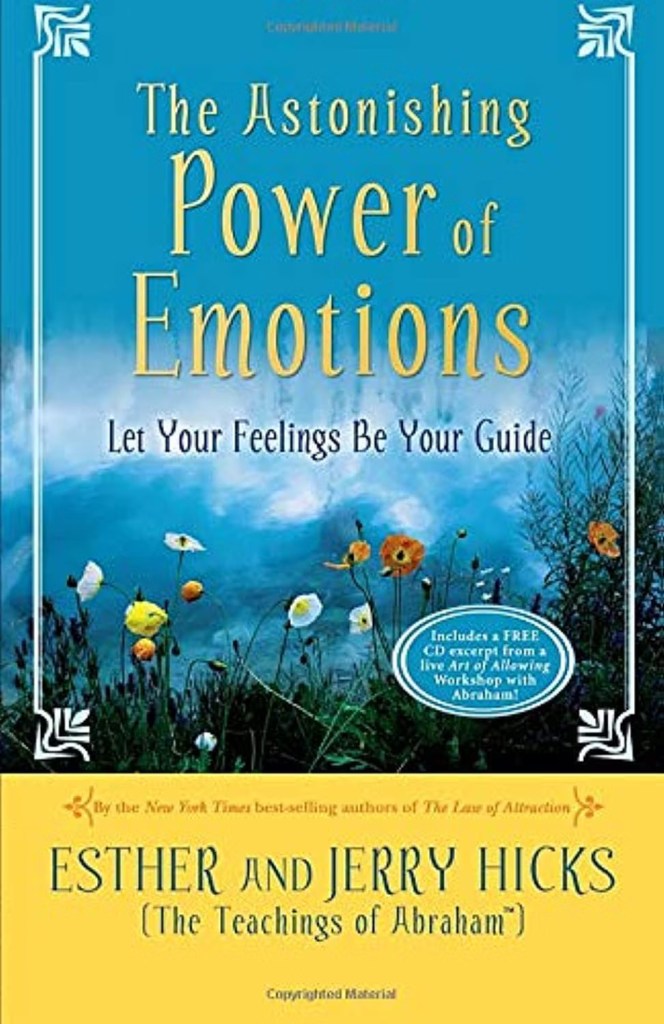
Book covers are shown for identification purposes and remain the property of their respective publishers and authors.
Note: This book review is for informational and educational purposes only. It is not medical advice and should not replace guidance from a qualified healthcare professional. Every brain injury and recovery journey is different.


Do you Love Love YOUR Brain?