
Your brain can continue to learn, change, and build new connections throughout life. Even after a traumatic brain injury (TBI), the brain has the ability to adapt.
This ability is called neuroplasticity. 💗
Neuroplasticity means your brain can change through learning, practice, and experience.
Recovery looks different for everyone. Some days are easier than others. But small activities, repeated over time, can help you keep learning and working toward your goals.
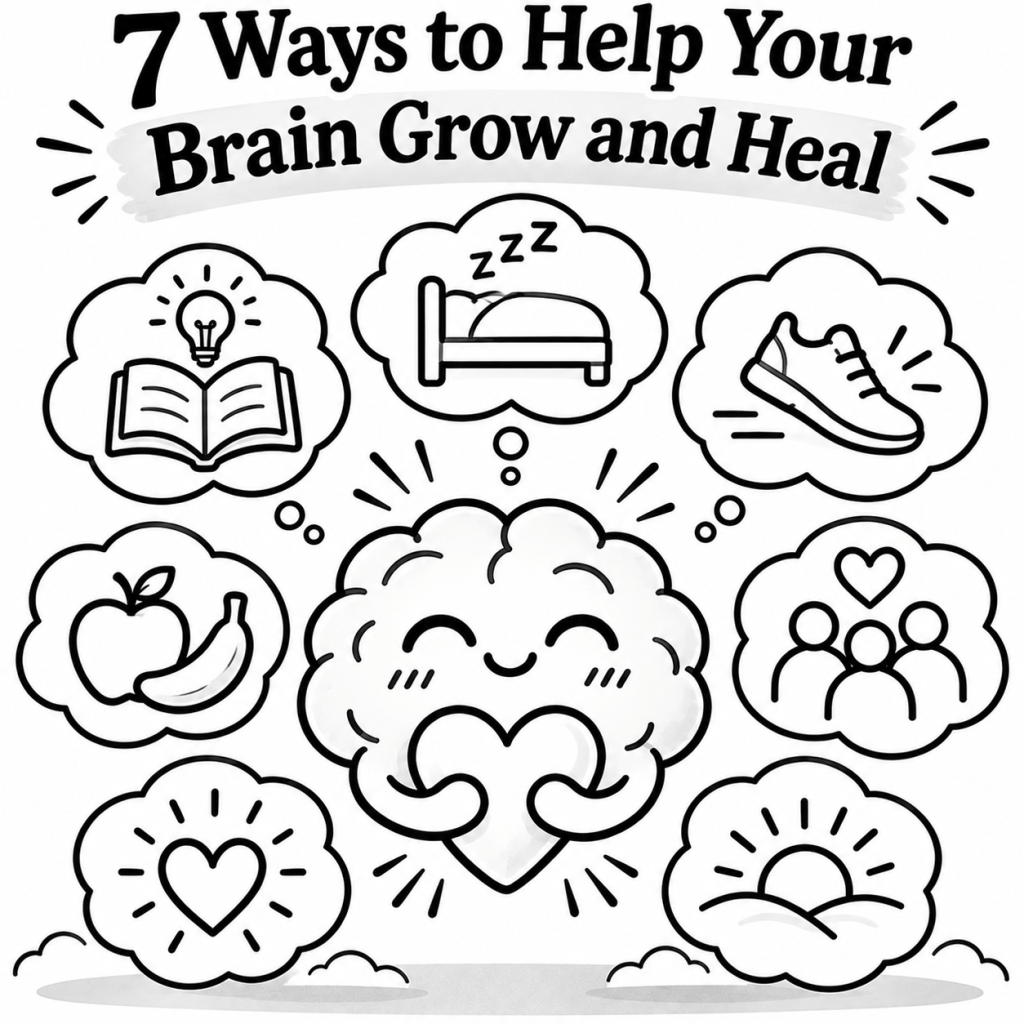
Here are seven ways to support your brain health and give your brain opportunities to grow.
🎹 1. Learn Something New
Learning something new gives your brain a chance to practice different skills.
You could try:
🎹 Learning to play the piano.
🌍 Learning a new language.
🧩 Doing puzzles.
🎲 Playing strategy games.
🎨 Trying a new hobby.
Choose something that interests you. It doesn’t have to be difficult or perfect.
The goal is to enjoy learning something new!
🚴♀️ 2. Move Your Body
Movement is good for your overall health, including your brain.
Physical activity supports blood flow and can support brain health.
You might enjoy:
🚶 Going for a walk.
🏊 Swimming.
🚴 Riding a bicycle.
💃 Dancing.
🌳 Spending time outdoors.
Start with activities that match your abilities and energy level. If you have physical limitations after a brain injury, ask your healthcare team what activities are safe for you.
😴 3. Get Quality Sleep
Sleep is an important part of brain health.
Your brain uses sleep to process information and strengthen memories.
Try these simple habits:
🌙 Keep a regular sleep schedule.
🛏️ Make your bedroom comfortable.
📵 Reduce screen time before bed.
☕ Avoid caffeine close to bedtime if it affects your sleep.
😴 Give yourself enough time to rest.
Remember, rest is not wasted time. Your brain needs it!
🧘♀️ 4. Reduce Stress
Stress can make it harder to concentrate, remember things, and learn.
Finding ways to relax can help you feel more comfortable and focused.
Try:
🌬️ Deep breathing.
🧘 Meditation.
🌸 Mindfulness.
🌿 Gentle yoga, if suitable for you.
🎵 Listening to calming music.
You don’t need to spend hours doing these activities. Even a few quiet minutes can be a helpful break.
🎯 5. Practice Focus
After a brain injury, concentrating can sometimes take more effort.
Instead of doing many things at once, try focusing on one activity.
Here are some ideas:
🎯 Choose one task.
📵 Reduce distractions.
⏰ Practice for a short time, even 10 minutes if comfortable.
🔁 Repeat activities regularly.
🛑 Take breaks when your brain feels tired.
Remember, you don’t have to push through exhaustion.
Small amounts of practice can be meaningful.
🥑 6. Feed Your Brain
Eating a variety of nutritious foods supports your overall health and gives your body nutrients your brain needs.
Here are some examples:
🐟 Salmon: Contains omega-3 fatty acids.
🌰 Walnuts: Provide healthy fats and other nutrients.
🫐 Blueberries: Contain antioxidants.
🥬 Leafy greens: Provide vitamins and minerals.
🥑 Avocados: Contain healthy fats.
Try to include different fruits, vegetables, healthy fats, and protein in your meals.
There is no single food that can heal a brain injury, but balanced nutrition is an important part of caring for your health.
❤️ 7. Connect With Others
Your brain needs more than exercises and activities. Human connection matters, too.
Spending time with people you care about can support emotional well-being and give you opportunities to communicate and participate.
You could:
💗 Spend time with friends and family.
🤝 Join a support group.
🌸 Volunteer.
👩🏫 Mentor someone.
🎨 Join a class or group activity.
☕ Enjoy a conversation with someone you trust.
You don’t have to be around people all the time. Choose connections that make you feel supported and comfortable.
🌸 Remember: Small Steps Matter!
Neuroplasticity is possible throughout life, including after a brain injury.
Here are a few reminders to take with you:
✨ Small steps matter. You don’t have to do everything at once.
💗 Practice makes a difference. Repeating an activity gives you more chances to learn.
🌱 Rest is part of learning. Give your brain time to recover from activity.
🦋 Progress, not perfection. Everyone’s journey is different.
💕 Love Love Brain Thoughts
Living with a brain injury can change the way we learn, move, remember, and experience everyday life.
Some things may take longer than they used to. Some days may feel frustrating. And sometimes, even a small achievement can feel like a big victory.
But remember, your life doesn’t have to stop because your brain injury changed your path.
You can still explore new hobbies, learn new skills, build connections, and discover things that bring you happiness.
Be patient with yourself. Celebrate your progress, even when it feels small.
Your brain is still capable of learning. Keep growing, keep trying, and keep finding reasons to smile! 💗
💬 We’d Love to Hear From You
Which of these seven activities would you like to try?
Have you discovered a hobby or activity that helps you feel happier, more confident, or more engaged after a brain injury?
Share your experience in the comments. Your story might inspire someone else in the TBI community!
📱 Follow and Support Love Love Brain
If this message speaks to you, please support Love Love Brain by following us on social media. 💗
Stay connected for more stories, reflections, helpful information, and supportive content about brain injury, recovery, resilience, and everyday life.
Click the buttons below to follow and support us on social media:
Note: This article is for education and support, not medical advice. Neuroplasticity does not guarantee recovery or specific results. Every brain injury is different. Choose activities that are appropriate for your abilities and consult your healthcare team about your individual needs.


Do you Love Love YOUR Brain?