
Have you ever found yourself asking the same questions over and over? 🤔
💭 Why did this happen to me?
💭 Why is my life so difficult?
💭 Why can’t things go back to the way they were?
💭 Why did someone treat me that way?
💭 Why can’t I do the things I used to do?
Sometimes, asking “why” can help us understand a situation. But when we keep asking the same painful questions without finding answers, we can get stuck in sadness, frustration, and disappointment. 😔
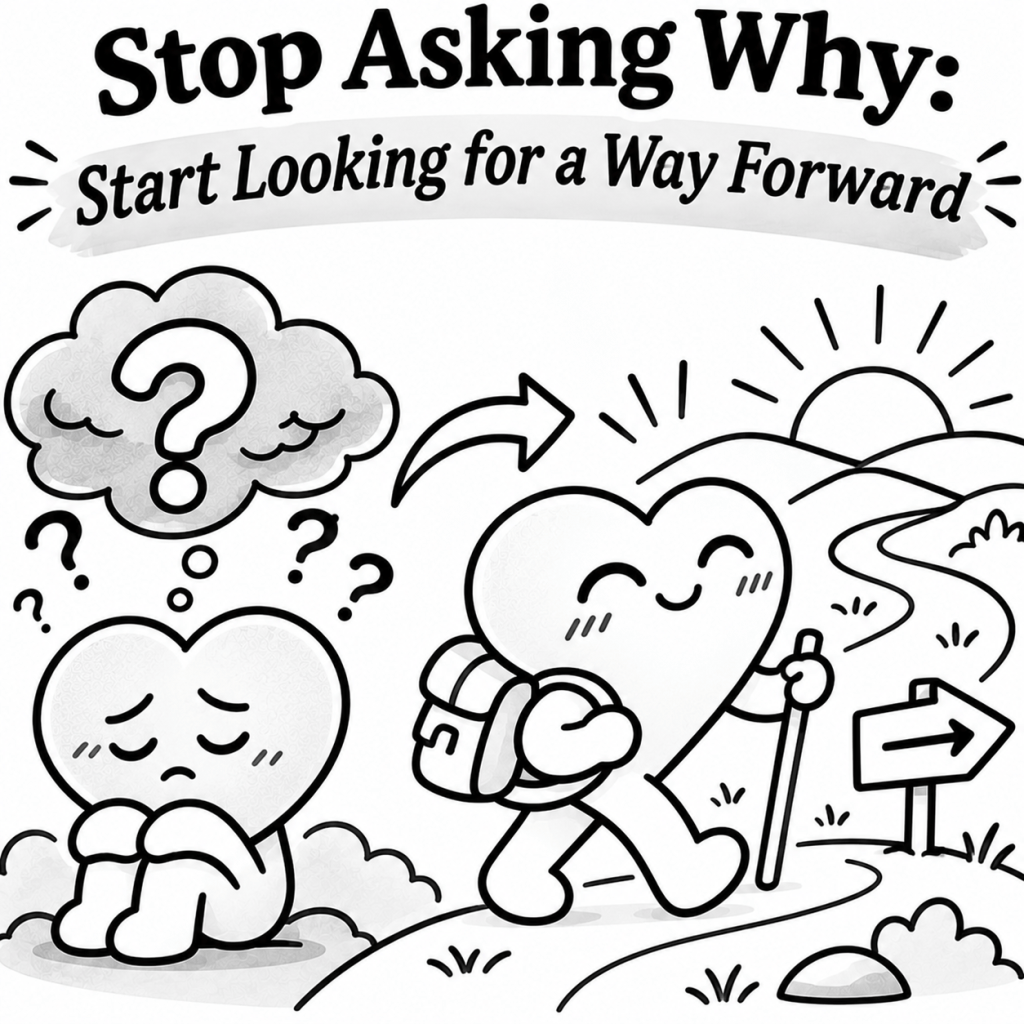
What if we tried asking a different question?
✨ Instead of asking “Why?” try asking “What can I do now?”
This small change in thinking can help us focus on solutions, new possibilities, and the next step forward. 🌱
🧠 1. Stop Repeating Questions That Have No Answers
Life doesn’t always give us the answers we want.
After a brain injury, it is natural to wonder why it happened and why recovery can be so difficult. 💔
We may miss our old lives, our abilities, our independence, or the things that once came easily.
Those feelings are real, and we deserve time to process them. 💗
But constantly asking why something happened may not change what happened.
Instead, try asking:
🌷 What can I do to make today a little easier?
🤝 What support do I need?
😊 What is one thing I can still enjoy?
🌱 What small step can I take?
We cannot always change the past, but we can look for ways to make today better.
🌸 2. Move From Problems to Solutions
When something goes wrong, our minds can become focused on the problem.
We may replay conversations, think about what someone said, or imagine what we should have done differently. 🔄
Instead of staying in that cycle, try looking for a possible solution. 💡
For example:
Instead of: “Why is everything so difficult?”
✨ Try: “What could make this easier?”
Instead of: “Why can’t I remember everything?”
✨ Try: “What reminders or tools could help me?”
Instead of: “Why don’t people understand me?”
✨ Try: “How can I explain what I need?”
You don’t have to solve everything immediately.
Sometimes, finding one small solution is enough for today. 💕
💗 3. Learn to Forgive and Let Go
Holding on to anger, disappointment, and painful memories can take a lot of emotional energy. 😔
Sometimes, we keep thinking about what someone did to us or what we wish had happened differently.
Forgiveness can help us move forward. 🦋
But forgiveness does not mean:
🚫 Saying that someone’s behavior was okay.
🚫 Pretending that nothing happened.
🚫 Allowing someone to hurt us again.
🚫 Forgetting what we learned from the experience.
You can forgive someone and still have boundaries. 🛑
You can let go of some anger without allowing that person back into your life.
And remember, forgiveness takes time. You do not have to rush it. 🌷
Sometimes, the person we need to forgive is ourselves. ❤️
We all make mistakes. We all have moments we wish we could change.
Give yourself the same kindness you would give someone you love. 💕
🌱 4. Focus on What You Can Control
There are many things in life we cannot control.
We cannot change yesterday. We cannot control what other people think. We cannot make every situation turn out the way we want.
But we can sometimes choose how we respond. 💪
We can choose to:
😴 Take a break when we feel overwhelmed.
🤝 Ask for help when we need it.
💗 Spend time with supportive people.
🎨 Practice a new skill.
🛑 Set healthy boundaries.
😊 Do something that brings us happiness.
Focus your energy on the things you can influence.
You don’t need to carry every problem in the world. 🌎
✨ 5. Replace Negative Thoughts With Helpful Questions
Our thoughts can affect how we feel and what we do next.
When you notice yourself asking painful questions, pause and try a different one. 🌸
| Instead of asking… | Try asking… |
|---|---|
| 💭 Why did this happen to me? | 🌱 What can help me move forward? |
| 😔 Why can’t I be like I was before? | 💗 What can I enjoy and learn today? |
| 🤯 Why is everything so hard? | 💡 What can I make easier? |
| 💔 Why did they hurt me? | 🛑 What boundaries do I need? |
| 😞 Why did I make that mistake? | 📚 What can I learn from it? |
| 😢 Why am I having a bad day? | ❤️ What do I need right now? |
You don’t have to force yourself to think positively all the time.
The goal is to give your mind another direction to explore. 🦋
🙏 6. Practice Gratitude for the Little Things
When life is difficult, it can be hard to notice what is still good.
Gratitude doesn’t mean ignoring pain or pretending everything is wonderful.
It means making room to notice the small things that bring comfort or happiness. ☀️
You might be grateful for:
💌 A kind message from a friend.
☕ A good cup of coffee.
🌅 A peaceful morning.
🎵 A favorite song.
🌻 A beautiful sunset.
😂 A few minutes of laughter.
🫂 Someone who understands you.
You can write down one thing you appreciate each day. 📝
Some days, it may be something very small.
And that’s enough. 💗
🦋 7. Give Yourself Permission to Start Again
You don’t have to fix your entire life in one day.
You don’t have to have all the answers.
You can start with one small change. 🌱
If yesterday was difficult, today is another opportunity to try again.
If you made a mistake, learn from it. 📚
If you need help, ask for it. 🤝
If you need rest, take a break. 😴
And if you are not ready to forgive or move forward yet, give yourself time. ❤️
Moving forward doesn’t mean pretending the past didn’t happen. It means allowing yourself to have a future beyond it. 🌈
💕 Love Love Brain Thoughts 🧠
Life after a brain injury can bring many questions, frustrations, and unexpected challenges.
It is okay to grieve what has changed. It is okay to feel angry, sad, or disappointed. 💗
But we don’t want our minds to spend every day trapped in questions that have no answers.
Sometimes, the most helpful question isn’t “Why did this happen?”
It is:
🌸 “What can I do today to make my life a little better?”
💡 Focus on solutions.
💗 Practice forgiveness when you’re ready.
🛑 Set healthy boundaries.
🙏 Notice the good things.
🤝 Ask for support.
🎉 Celebrate small victories.
You may not be able to change everything that happened, but you can keep looking for ways to create a meaningful life.
✨ Less time asking why. More time discovering what is possible. One small step at a time. 🌷🦋💕
💬 We’d Love to Hear From You
🤔 Do you sometimes find yourself asking “Why?” over and over?
🌱 What helps you change your thinking and focus on solutions?
💗 Have forgiveness, gratitude, or letting go helped you move forward?
Share your thoughts in the comments. Your experience may encourage someone else who needs a little hope today! 🫂
📱 Follow and Support Love Love Brain
If this message speaks to you, please support Love Love Brain by following us on social media. 💗
Stay connected for more stories, reflections, helpful information, and supportive content about brain injury, recovery, resilience, and everyday life.
Click the buttons below to follow and support us on social media:
Note: This article offers personal reflection and encouragement, not medical or mental health advice. Everyone processes difficult experiences differently. You do not need to rush grief, forgiveness, or healing. Seeking support is okay.


Do you Love Love YOUR Brain?