
Packing for a trip can be stressful for anyone. But when you live with a traumatic brain injury (TBI), it can feel like a much bigger challenge.
There are so many things to remember! 🤯
What should I bring? Did I pack my medication? Where are my keys? What if I forget something important?
Even simple decisions can become overwhelming when your brain is already dealing with fatigue, memory problems, or too much information.
That’s why having a simple packing plan can make a big difference. 💗
🧠 Why Packing Can Feel So Difficult After TBI
Packing involves many small tasks and decisions.
You have to remember what you need, organize your belongings, think about the weather, and make sure nothing important is left behind.
For someone with a brain injury, this can lead to:
🧩 Memory difficulties.
😴 Mental fatigue.
📋 Trouble organizing tasks.
🤯 Feeling overwhelmed by too many decisions.
💭 Worrying about forgetting something.
⏰ Needing more time to get ready.
Sometimes, the hardest part isn’t putting things into a suitcase. It’s figuring out where to begin.
💗 Start Early and Make a Simple Plan
One of the best ways to make packing easier is to avoid doing everything at the last minute.
Give yourself enough time. For longer trips, try starting two days before you leave.
Begin with a few simple questions:
📍 Where am I going?
📅 When am I leaving and returning?
🧳 How long will I be away?
🌤️ What will the weather be like?
🎉 What activities will I be doing?
🎒 What kind of bag or suitcase will I need?
Writing down the answers can help you organize your thoughts.
📝 Pack One Category at a Time
Instead of trying to pack everything at once, divide your belongings into smaller groups.
This makes the process easier to manage.
🔑 Everyday Essentials
☐ 📱 Phone and charger.
☐ 👛 Wallet, cash, and cards.
☐ 🪪 Identification and keys.
☐ 👓 Glasses and sunglasses.
☐ 🎟️ Tickets and travel documents.
☐ 💳 Insurance card.
👚 Clothes and Shoes
☐ 👕 Outfits for each day, plus one spare.
☐ 🧦 Underwear and socks.
☐ 💤 Pajamas.
☐ 👟 Comfortable shoes.
☐ 🧥 Sweater, jacket, or raincoat.
☐ 🧺 Laundry bag for worn clothes.
💊 Health and Comfort
☐ 💊 Medications and extra supplies for the trip.
☐ 📝 Medication list and emergency contact information.
☐ 🪥 Toothbrush and toothpaste.
☐ 🧴 Skincare and personal care items.
☐ 💇 Hairbrush and sunscreen.
☐ 🎧 Earplugs, eye mask, or soft clothing.
🥤 Food and Drinks
☐ 💧 Water bottle.
☐ 🍎 Favorite snacks.
☐ 🥪 Easy meals.
☐ 🍽️ Special foods or dietary items.
🌸 Remember Your Brain Comfort Items
Packing isn’t only about bringing what you need. It’s also about bringing things that help you feel comfortable.
Think about what makes your surroundings easier to manage.
You might need:
☐ 🎧 Earplugs to reduce noise.
☐ 😴 An eye mask to rest.
☐ 👚 Soft and comfortable clothing.
☐ 🍪 Familiar snacks.
☐ 🧸 A favorite comfort item.
☐ 💗 Anything that helps you relax.
Your comfort matters. You don’t have to pack like everyone else.
🐶 Don’t Forget Your Dog’s Things!
If you’re traveling with a dog, remember to pack their essentials, too. 🐾
For walks and outings:
☐ 🦮 Leash and backup leash.
☐ 🐕 Collar or harness with ID tag.
☐ 💩 Poop bags.
☐ 🦴 Treats and treat pouch.
☐ 💧 Water and collapsible bowl.
For longer trips:
☐ 🥣 Dog food and extra servings.
☐ 🍽️ Food bowl and scoop.
☐ 💊 Medications, if needed.
☐ 🧸 Favorite toy, blanket, or bed.
☐ 🧼 Towel and paw wipes.
If you use a service dog, remember any necessary gear and travel information.
📦 Gather Everything Before Packing
Before putting things into your suitcase, gather your belongings in one place.
Then pack one category at a time.
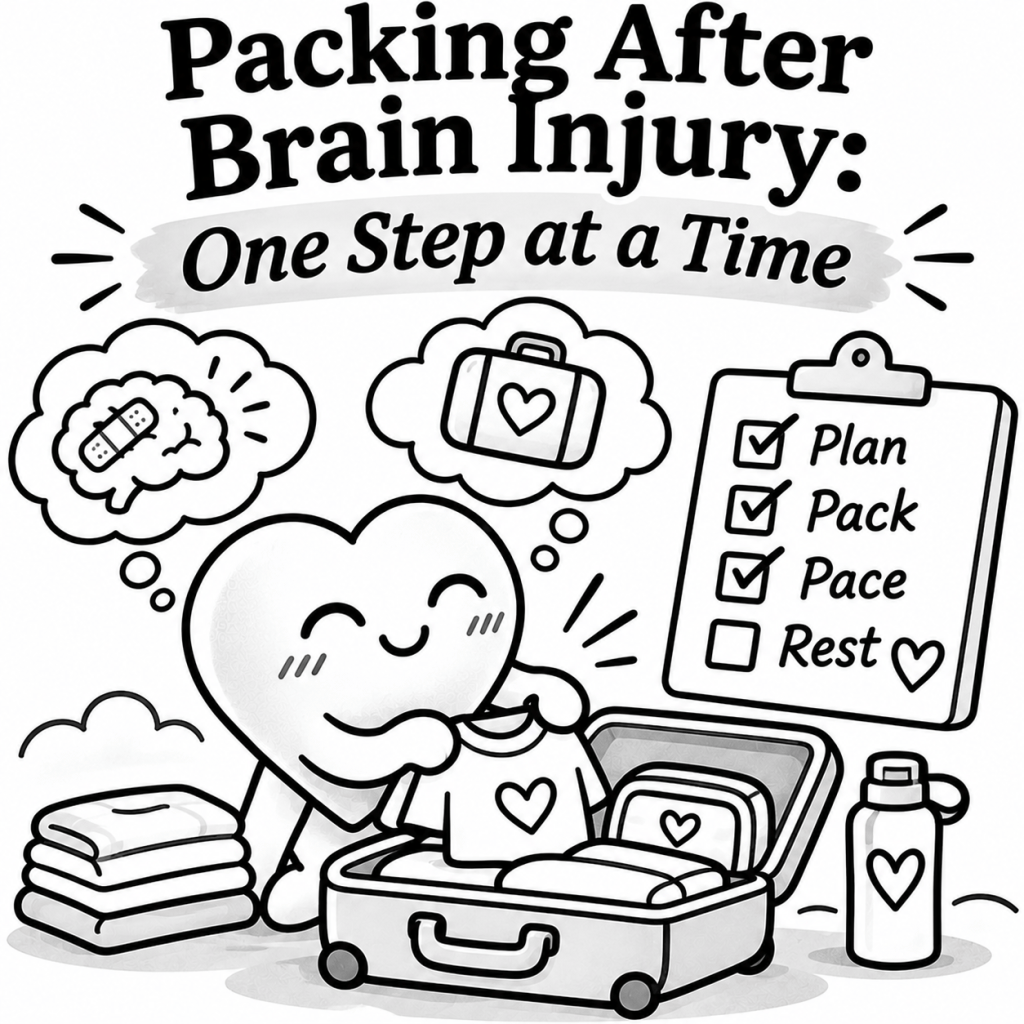
☑️ Check each item off your list as you go.
Keep medications and important valuables somewhere easy to reach.
A written checklist is especially helpful because you don’t have to rely on your memory for everything.
🚪 Do One Final Check Before Leaving
Before walking out the door, take a few minutes to check:
☐ 📱 Phone.
☐ 🔑 Keys.
☐ 👛 Wallet and identification.
☐ 💊 Medications.
☐ 🔌 Chargers.
☐ 🧳 Last-minute items.
☐ 🐶 Pet supplies, if needed.
☐ 🏡 Lights, windows, and locks.
If you have a helper, ask them to double-check the list with you.
There is nothing wrong with asking for help. 💕
💕 Love Love Brain Thoughts
Packing after a brain injury may take more time, patience, and organization.
And that’s okay!
You don’t have to do everything in one sitting. You don’t have to remember every item without help. You don’t have to rush.
Use a checklist. Set reminders. Take breaks. Ask someone to help when needed.
Most importantly, give yourself permission to do things differently.
The goal isn’t to pack perfectly. The goal is to make getting ready easier and enjoy the journey.
One step at a time. One item at a time. One little victory at a time. 💗
📥 Download Your Free Packing Checklist
Packing doesn’t have to be overwhelming! 💕
Use our My Easy Packing Checklist to help you plan your trip, gather your belongings, pack one category at a time, and remember the important things before leaving.
🧳 The checklist includes:
- 📍 Planning your trip.
- 🔑 Everyday essentials.
- 👚 Clothes and personal care.
- 💊 Health and comfort items.
- 🥤 Food and drinks.
- 🐶 Dog and service dog supplies.
- 🚪 Final checks before leaving.
Click below to download your free checklist!
Keep a copy near your suitcase, print it out, or save it on your phone. You can also ask someone to help you check off the items.
💬 We’d Love to Hear From You
Do you find packing stressful after a brain injury?
What items do you always make sure to bring? Do you use a checklist, reminders, or help from someone else?
Share your packing tips in the comments. Your ideas might make traveling easier for another brain injury survivor! 💗
📱 Follow and Support Love Love Brain
If this message speaks to you, please support Love Love Brain by following us on social media. 💗
Stay connected for more stories, reflections, helpful information, and supportive content about brain injury, recovery, resilience, and everyday life.
Click the buttons below to follow and support us on social media:
Note: Every brain injury is different. These packing ideas are general suggestions and can be adjusted to your personal needs. This content is for education and support, not medical advice.


Do you Love Love YOUR Brain?