
A brain injury can affect people in many different ways. Symptoms may change throughout the day, and some challenges may be difficult to explain to others.
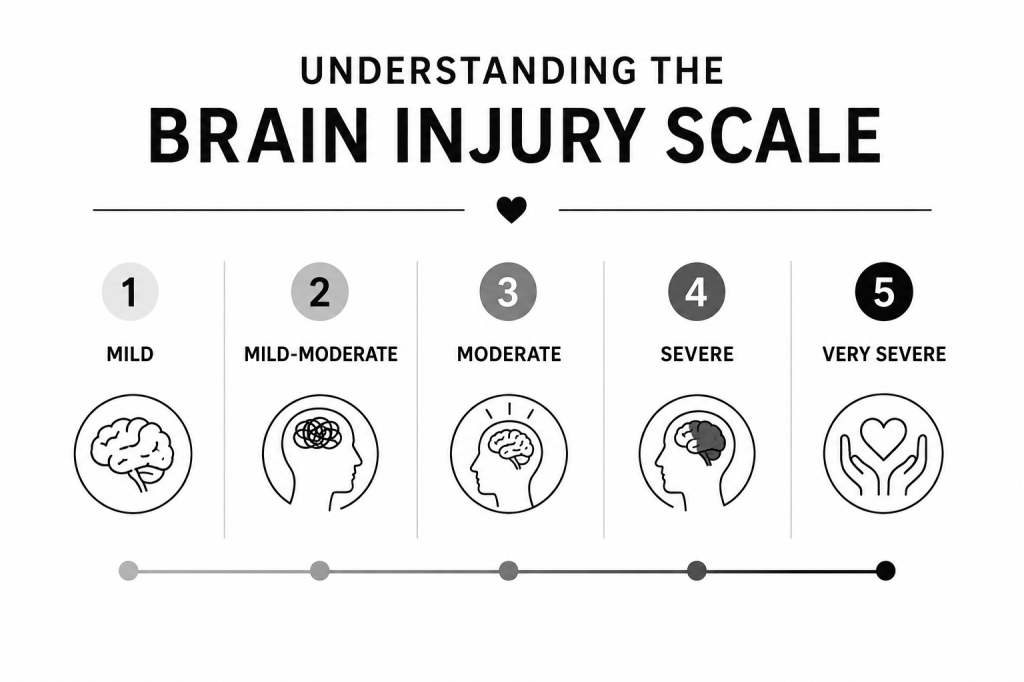
A brain scale can be a simple way to pause, check in with yourself, and communicate how you’re feeling.
It can help you notice changes in your symptoms, energy, emotions, and ability to manage daily activities.
🧠 What Is a Brain Scale?
Think of a brain scale as a quick self-check.
Instead of simply asking:
💭 “How am I doing today?”
you can ask more specific questions:
🧠 How clear does my thinking feel?
🔋 How much energy do I have?
💭 How well can I concentrate?
❤️ How am I feeling emotionally?
🔊 Am I sensitive to noise or other stimulation?
🚶 How comfortable and steady do I feel physically?
This can help you recognize when your brain may need more rest or support.
📊 A Simple 1-10 Check-In
You can create a simple scale from 1 to 10.
🌱 1-3: Doing Well
You may feel:
😊 Clear-headed
⚡ Comfortable energy
🧠 Able to focus
❤️ Emotionally steady
This may be a good time to complete important activities while still remembering to pace yourself.
🌼 4-6: Slow Down
You may begin noticing:
😴 Increased fatigue
💭 Difficulty concentrating
🤕 Mild headaches
😣 Irritability
🔊 Sensory overload
This can be a reminder to pause, reduce stimulation, or take a break.
🛑 7-10: Time to Recharge
You may feel significantly overwhelmed or exhausted.
You might experience:
🤕 Stronger symptoms
😵 Dizziness
💭 Increased brain fog
😣 Difficulty processing information
😴 Extreme fatigue
At this point, consider stepping away from demanding activities and giving your brain time to recover.
If symptoms are severe, new, or worsening, contact a healthcare professional.
🔋 Think of Your Brain Like a Battery
Your brain has a limited amount of energy each day.
Different activities can use different amounts of that energy.
💻 Working
🛒 Shopping
💬 Socializing
📱 Using screens
🧠 Concentrating
🚗 Driving
Even activities that don’t feel physically demanding can require significant mental energy.
A brain scale can help you notice when your battery is getting low.
📝 Keep Track of Your Patterns
You may find it helpful to write down your brain scale number at different times of the day.
For example:
🌞 Morning: 3/10
🍽️ Afternoon: 5/10
🌙 Evening: 8/10
Over time, you may begin to notice patterns.
Perhaps your energy drops after several hours of concentration.
Maybe noisy environments increase your symptoms.
Or perhaps you discover that taking regular breaks helps you maintain your energy longer.
These observations can help you better understand your needs.
🤝 Use Your Scale to Communicate
Sometimes it can be difficult to explain exactly how you’re feeling.
A number can make communication simpler.
Instead of saying:
💭 “I don’t feel good, but I don’t know how to explain it.”
you could say:
“I’m at a 7 today, so I need to slow down.”
This can help family members, caregivers, friends, or coworkers understand that you may need extra time, fewer demands, or a quiet environment.
💜 Your Number Is Not a Judgment
Your brain scale isn’t a test you can pass or fail.
A higher number doesn’t mean you’ve done something wrong.
A lower number doesn’t mean you’re “better” than someone else.
It’s simply information.
🌱 Notice it.
🧠 Listen to it.
❤️ Respond to what you need.
✨ Final Thoughts
Learning to recognize how your brain feels throughout the day can help you become more aware of your needs.
A simple brain scale can help you:
🧠 Notice symptoms
🔋 Manage your energy
⏸️ Know when to rest
🤝 Communicate with others
🌱 Make choices that support recovery
Your brain gives you signals every day.
Take a moment to listen.
Your needs matter, and understanding them is an important part of caring for yourself.


Do you Love Love YOUR Brain?