
Recovery after a brain injury doesn’t always come with obvious milestones.
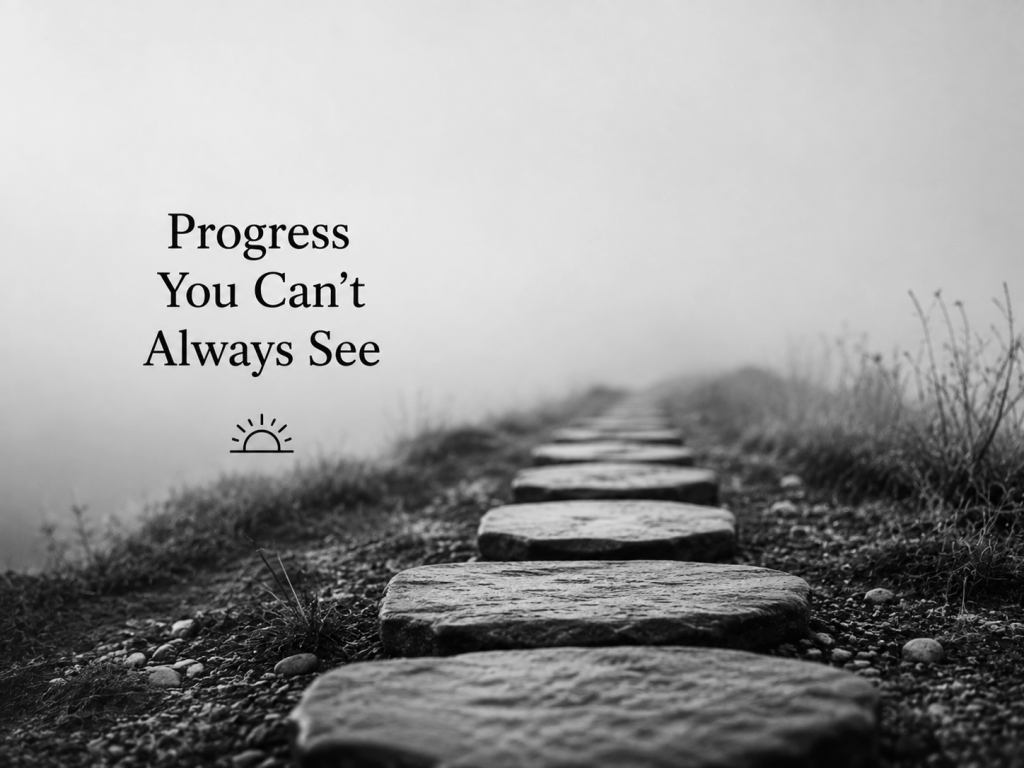
Sometimes progress is invisible.
It may be learning how to manage your energy, recognizing when you need a break, becoming more comfortable asking for help, or simply understanding yourself better than you did yesterday.
These changes may not look dramatic from the outside.
But they matter.
🌱 Progress Isn’t Always About Doing More
We often think of progress as being able to do something we couldn’t do before.
But after brain injury, progress can also mean learning how to do less when less is what your brain needs.
Progress might look like:
⏸️ Taking a break before becoming overwhelmed
🔋 Protecting your energy
🧠 Recognizing your limits
📝 Using reminders
🔇 Choosing a quieter environment
🤝 Asking someone for help
These are not setbacks.
They are skills.
💜 Some Victories Are Quiet
Not every accomplishment needs to be celebrated by everyone else.
Maybe you:
🌅 Got through a difficult morning
💬 Had a conversation you were worried about
🚶 Took a short walk
📖 Finished a few pages of a book
😊 Enjoyed something you hadn’t enjoyed in a while
❤️ Reached out to someone
Those moments can carry much more meaning than other people realize.
A small victory is still a victory.
🧠 Learning Your Brain Is Progress
Brain injury can teach you things about yourself that you may never have needed to know before.
You may learn:
🔋 How much energy you really have
🔊 Which environments overwhelm you
⏰ When you function best
💭 What causes mental fatigue
⏸️ When you need to stop
🌱 What helps you recover
This awareness can become an important part of your journey.
🌤️ A Difficult Day Doesn’t Erase Progress
You may have a good day followed by a difficult one.
You may accomplish something one week and struggle with it the next.
That can feel discouraging.
But recovery isn’t always a straight line.
A difficult day doesn’t erase everything you’ve learned.
It doesn’t erase your previous progress.
It simply means today is different.
❤️ Give Yourself Credit
It’s easy to focus on what you still can’t do.
Try looking at what you can do.
Ask yourself:
What is easier now than it was before?
What have I learned about myself?
What strategies help me?
What am I proud of?
You may discover that you’ve made more progress than you realized.
🤝 Let Others See the Progress Too
Sometimes family and friends may not recognize how much effort something requires.
You can help them understand by sharing your experience.
Tell them:
💬 “That took a lot of energy.”
💬 “I’m proud that I was able to do that.”
💬 “I need to rest now.”
💬 “This is progress for me.”
Your definition of progress doesn’t have to match anyone else’s.
🌻 Hope Can Live in Small Moments
Hope isn’t always about knowing exactly what the future will look like.
Sometimes hope is simply recognizing that something is possible today that wasn’t possible before.
Maybe it’s a little more confidence.
A little more understanding.
A little more independence.
A little more peace.
🌱 Small changes can become meaningful changes over time.
💭 You Don’t Have to Be Where You Thought You’d Be
Maybe your recovery hasn’t followed the timeline you imagined.
Maybe you’re not where you expected to be.
That’s okay.
Your journey doesn’t become less meaningful because it looks different.
You can grieve what changed while still appreciating how far you’ve come.
Both can exist together.
✨ Final Thoughts
Progress after brain injury isn’t always visible.
Sometimes it happens quietly.
It happens when you learn your limits.
When you protect your energy.
When you ask for help.
When you try again.
When you recognize a difficult day without allowing it to define your entire journey.
🌻 Progress can be quiet.
🌱 Hope can be small.
💜 And small steps can still move you forward.
Don’t overlook the progress that nobody else can see.
You know how hard you’ve worked to get here.


Do you Love Love YOUR Brain?