
Sometimes the hardest voice to live with is the one inside our own head.
“I’m not good enough.”
“I’m failing.”
“Nothing will change.”
“Everyone else is doing better than me.”
Negative thoughts can become so familiar that we stop questioning them.
Feeling Good: The New Mood Therapy by David D. Burns, M.D. is a landmark book associated with cognitive behavioral therapy and explores ways of identifying and challenging patterns of thinking associated with depression, anxiety, guilt, pessimism, procrastination, and low self-esteem.
For brain injury survivors, these ideas can be especially relevant because recovery can bring grief, frustration, anxiety, and changes in self-esteem.
🧠 Your Thoughts Can Affect How You Feel
Imagine waking up and thinking:
“Today is going to be terrible.”
Before anything has even happened, your brain has already created a story about the day.
That doesn’t mean your feelings aren’t real.
It means that sometimes the way we interpret an experience can influence how intensely we experience it.
🐜 Automatic Negative Thoughts
Brain injury can create many opportunities for negative thinking.
“I used to be able to do this.”
“Why can’t I remember?”
“I’m so slow.”
“I’m a burden.”
“I’ll never get better.”
These thoughts can feel like facts.
But they are thoughts.
And thoughts can be examined.
💭 Questioning the Thought
Instead of immediately believing:
“I can’t do anything anymore.”
we can pause.
What can I still do?
What has improved?
What am I learning?
What support do I have?
What is one thing I accomplished today?
The goal isn’t to force ourselves to think positively.
It’s to think more accurately and compassionately.
❤️ You Don’t Have to Be Your Own Critic
Recovery can already be exhausting.
We don’t need to make it harder by constantly attacking ourselves.
Instead of:
“I’m failing.”
Try:
“This is difficult, and I’m learning.”
Instead of:
“I’m weak because I need help.”
Try:
“I’m using the support available to me.”
That is a very different way of speaking to ourselves.
🌱 Small Changes in Thinking
Sometimes one thought can change the direction of an entire day.
Not because everything suddenly becomes perfect.
But because we stop adding another layer of suffering to an already difficult situation.
We can acknowledge:
“This is hard.”
without adding:
“And I’ll never be okay.”
🧩 Learning New Ways to Respond
CBT is not about pretending negative emotions don’t exist.
It’s about learning to recognize patterns and respond differently.
That can include identifying distorted thinking, examining evidence, and developing more balanced ways of interpreting difficult situations.
Burns has spent decades developing and teaching CBT approaches for depression and anxiety.
💗 Love Love Brain Thoughts
After brain injury, it can be very easy to focus on everything that changed.
But your thoughts about yourself matter too.
You are not your worst day.
You are not your slowest processing speed.
You are not your symptoms.
You are not your mistakes.
You are a whole person learning how to live through something difficult.
Be careful about the stories you tell yourself.
You deserve a story that is honest without being cruel.
💬 We’d Love to Hear From You
What negative thought do you find yourself repeating?
What helps you challenge it?
What would you say to another survivor who was being extremely hard on themselves?
📖 Where to Find the Book
Feeling Good: The New Mood Therapy was originally published in 1980 and has been revised and updated in later editions. Dr. Burns’s official website continues to describe Feeling Good as a foundational work in his CBT-based approach.
🛒 Get the Book on Amazon
Love Love Brain may earn a small commission from qualifying purchases made through this link. This does not affect the price you pay.
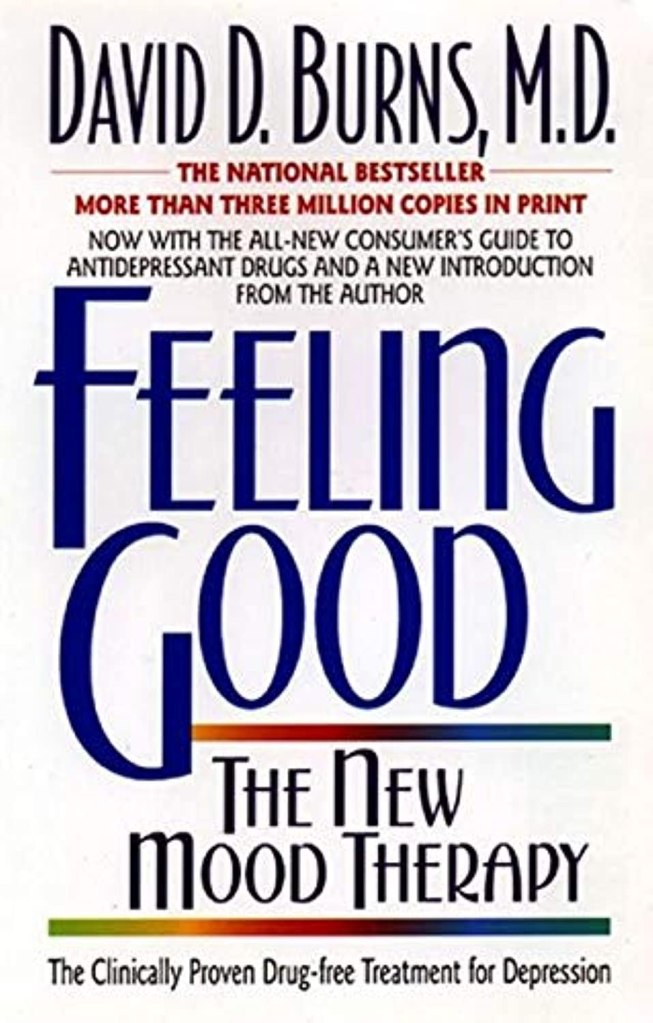
Book cover belongs to the publisher and is displayed for identification and review purposes.
Note: This book review is for educational and reflective purposes only and is not medical advice.


Do you Love Love YOUR Brain?