
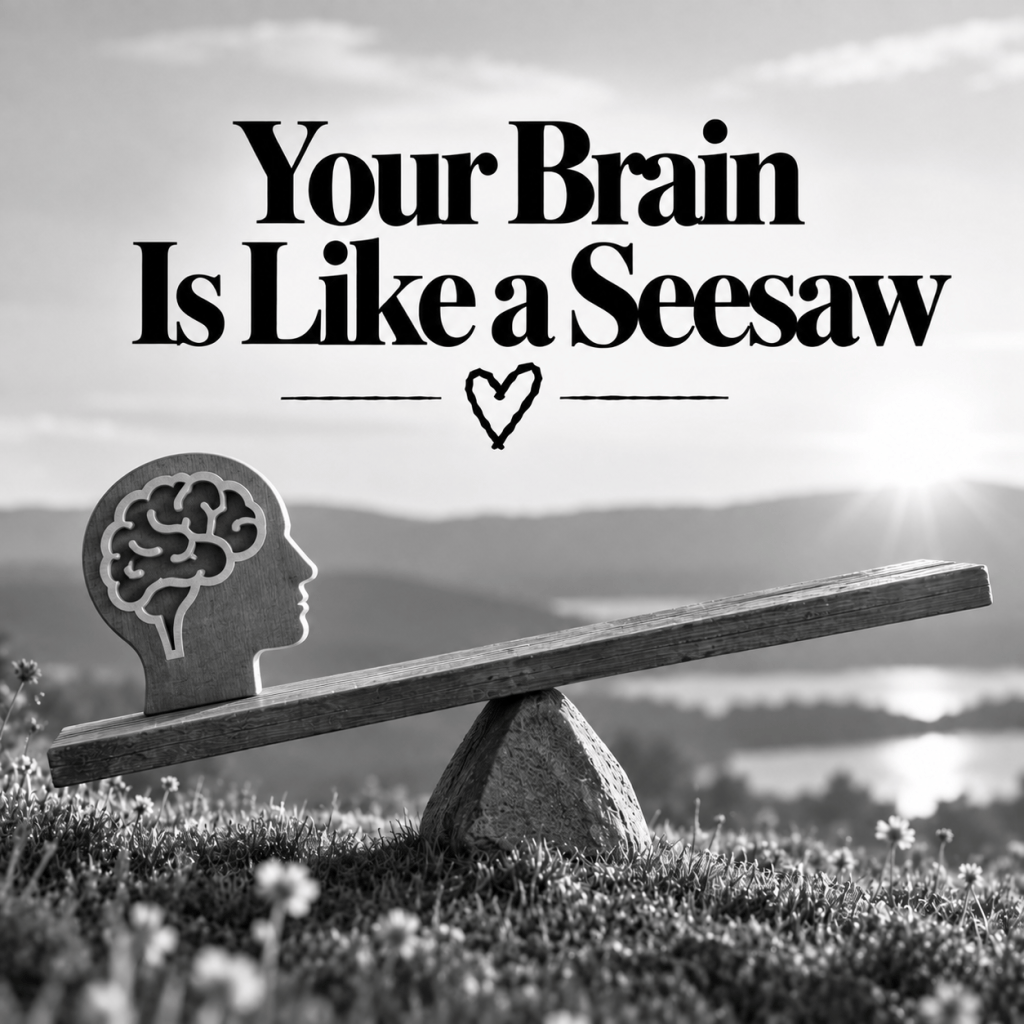
Your brain and emotions can sometimes feel like a seesaw.
On one side, there can be stress, fear, anger, shame, disgust, and sadness.
On the other side, there can be love, joy, trust, calm, and curiosity.
Sometimes, one small moment can change which direction you move.
⚖️ The Seesaw of Stress and Connection
Imagine your emotional state as a seesaw.
One side represents stress.
The other represents connection.
When stress takes over, difficult emotions can become stronger.
When you feel safe and connected, there may be more room for positive emotions and curiosity.
This doesn’t mean you can simply choose to stop feeling difficult emotions.
It means that noticing what is happening can give you an opportunity to respond differently.
🧠 Cortisol and Stress
The video describes cortisol as part of the body’s stress response.
When we experience stress, cortisol is involved in the body’s response to that stress.
The experience can come with emotions such as fear, anger, and sadness.
Shame and disgust can also become part of the emotional experience.
These feelings can be uncomfortable.
But difficult emotions are part of being human.
You don’t have to judge yourself for experiencing them.
🔄 Surprise Can Become a Pivot
One interesting idea in the video is surprise.
Surprise can interrupt what you were expecting.
Depending on what happens next, that moment can feel unsettling or can create an opportunity to connect.
A surprising situation may make you feel more stressed.
But it can also create curiosity.
“What is happening?”
“What do I need right now?”
“How can I respond?”
That pause can give you a moment to notice your emotions before reacting.
💗 Connection Can Change How We Feel
The video describes oxytocin in connection with feelings such as love and trust.
Human connection can be powerful.
A kind conversation.
A hug.
A trusted friend.
A supportive family member.
A moment of laughter.
These experiences can remind us that we are not alone.
Connection does not make every difficult emotion disappear.
But it can give us another emotional experience to hold alongside the difficult one.
🌿 You Can Make Space for Positive Experiences
When life is difficult, it can be easy to focus entirely on what is going wrong.
You may spend a lot of time thinking about symptoms, appointments, limitations, or things you can no longer do.
That is understandable.
But you can also intentionally make room for small moments of joy.
Listen to music you enjoy.
Spend time with someone who makes you feel safe.
Go outside if your body and environment allow it.
Enjoy a favorite activity.
Notice something beautiful around you.
These moments don’t have to be big to matter.
🧠 After Brain Injury, Emotional Changes Can Feel Different
For people living with brain injury, emotions can sometimes feel more difficult to manage.
Stress, fatigue, sensory overload, frustration, and changes in daily life can all affect how a person experiences their day.
That can make emotional regulation challenging.
If you find yourself becoming overwhelmed, you can pause and ask:
“What does my brain need right now?”
Maybe it needs quiet.
Maybe it needs rest.
Maybe it needs connection.
Maybe it needs less stimulation.
Listening to those needs can be an important part of caring for yourself.
🌱 Train Your Attention Toward What Supports You
The video encourages choosing trust, joy, and love.
That doesn’t mean ignoring fear, sadness, anger, or other difficult emotions.
You don’t have to force yourself to be positive.
Instead, you can notice the difficult emotion and then look for something supportive.
“I am having a hard moment, and I can still be kind to myself.”
“I feel stressed, and I can take a break.”
“I feel afraid, and I can reach out to someone I trust.”
Both things can be true.
💗 You Don’t Have to Fight Every Emotion
Sometimes, we make difficult emotions even harder by judging ourselves for having them.
You might think:
“Why am I feeling this way?”
“I shouldn’t be upset.”
“I should be stronger.”
Try giving yourself some compassion instead.
Your feelings are information.
You can notice them without allowing them to define your entire day.
You can experience sadness and still find a moment of joy.
You can experience fear and still reach for connection.
You can feel overwhelmed and still take one small step toward calm.
✨ Choose What You Want to Give More Space To
You cannot control every emotion that appears.
You cannot control everything that happens around you.
But you can sometimes choose what you give your attention to next.
Choose connection when you can.
Choose kindness toward yourself.
Choose curiosity.
Choose moments of joy.
Choose the people who make you feel safe.
And when stress takes over, remember that you can pause and begin again.
💗 Love Love Brain Note
The seesaw is a helpful way to think about the emotional balance described in this video, but emotions and brain chemistry are more complex than a simple two-sided model.
After brain injury, emotional experiences can be especially challenging.
You do not have to force yourself to feel positive all the time.
Give yourself permission to experience difficult emotions while also looking for safe, supportive moments of connection, rest, joy, and calm.
You don’t have to choose happiness every moment. You can simply choose the next supportive step. 💗
🎥 Watch the Video
Watch the video that inspired this blog post:
📱 Follow and Support Love Love Brain
If this message speaks to you, please support Love Love Brain by following us on social media. 💗
Stay connected for more stories, reflections, helpful information, and supportive content about brain injury, recovery, resilience, and everyday life.
Click the buttons below to follow and support us on social media:
Note: Every brain injury is different. This content is for education and support, not medical advice.


Do you Love Love YOUR Brain?