
What happens when you become frustrated with yourself because you can no longer do something you once loved? Do you criticize yourself, tell yourself to get over it, or allow yourself to feel the disappointment?
In this conversation, Adeline shares a deeply personal moment from her experience returning to tennis after a traumatic brain injury. After losing a match, she became overwhelmed with emotion. She walked off the court, sat outside the tennis club with her dog on her lap, and cried.
But something was different this time.
Instead of judging herself for crying, Adeline remembered what she had learned from Dr. Beth and her Inner Family Zoo framework. She connected with her loving wise self and offered comfort to the vulnerable part of herself that was hurting.
This conversation explores emotional healing, self-compassion, and the importance of learning to respond to ourselves with kindness, especially when life does not look the way it used to.
🎾 When Returning to Something You Love Becomes Painful
Before her brain injury, tennis was a major part of Adeline’s life. She had progressed from beginner to advanced levels, won tournaments, and even written books about how to play tennis.
Returning to the sport after her injury has been a very different experience.
Adeline explains that she is no longer able to play at the level she once did. Losing matches and struggling with skills that used to come naturally can be deeply upsetting.
During one particular match, the disappointment became too much. After losing, she started crying as she walked off the court. She eventually sat on the floor outside the club with her dog on her lap and could not stop crying.
It was not simply about losing a tennis match. It was also about facing the difference between what she could do before her injury and what she can do now.
For someone who once experienced so much success in tennis, that change can bring up grief, frustration, and a sense of loss.
🧸 Recognizing the Vulnerable Part of Yourself
Adeline describes how she used to respond to emotional moments like this. She might have criticized herself, questioned why she was crying, or told herself to stop behaving like a child.
Through her work with Dr. Beth, however, she has been learning to recognize different emotional parts of herself.
Dr. Beth’s Inner Family Zoo framework includes the vulnerable inner three-year-old, the perfectionistic super seven-year-old, the protective inner teenager, and the loving wise self.
In this moment on the tennis court, Adeline recognized that the vulnerable three-year-old part of herself was hurting.
Rather than trying to silence that part, she allowed herself to acknowledge the emotion.
She understood that it hurt not to be able to play the way she used to. It hurt to lose. It hurt to experience a sport that had once been such a source of achievement and enjoyment differently.
That recognition allowed her to respond with compassion instead of criticism.
💗 The Loving Wise Self: Giving Yourself an Emotional Hug
One of the most meaningful parts of Adeline’s story is how she turned to her loving wise self.
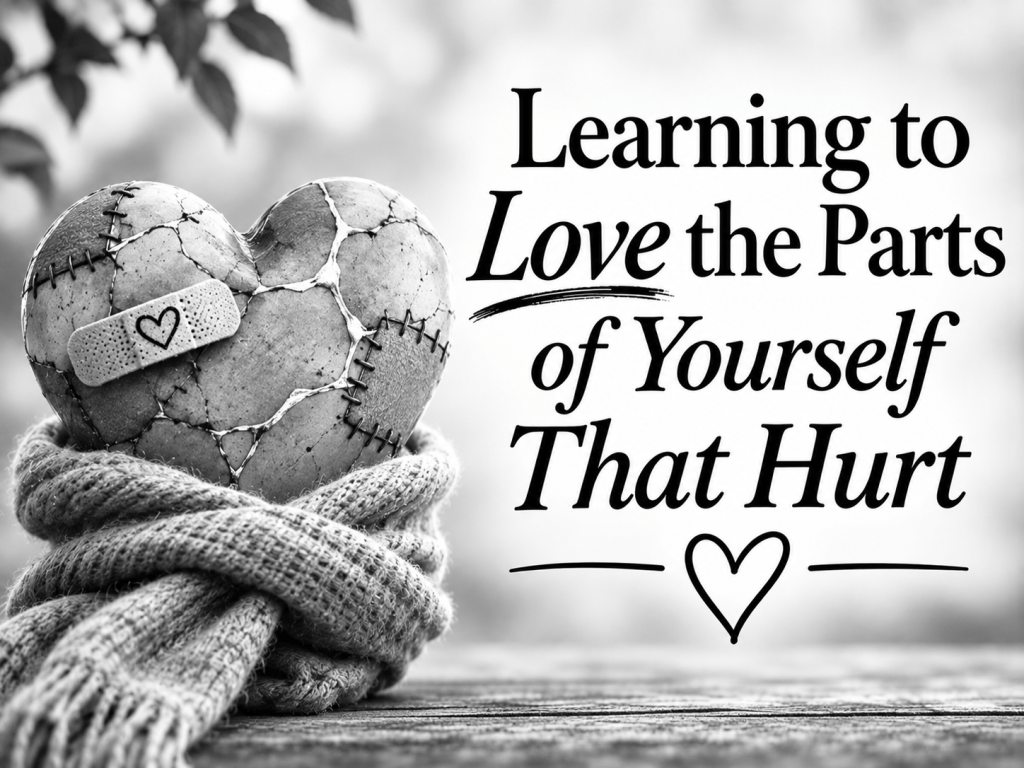
She imagined looking at the part of herself sitting on the floor, crying with her dog on her lap. Instead of judging her, she emotionally hugged her and offered reassurance.
She essentially told herself:
“It’s okay, darling. I know it hurts.”
This may sound simple, but it represents an important change in how we relate to ourselves.
When we are upset, we can sometimes add another layer of pain by criticizing ourselves for having emotions in the first place. We might feel sad and then feel ashamed for being sad. We might feel frustrated and then become angry with ourselves for not handling the situation better.
Self-compassion offers another possibility.
It allows us to acknowledge what hurts without making ourselves wrong for feeling it. We can recognize disappointment without pretending it does not exist. We can comfort ourselves without demanding that the emotion disappear immediately.
Adeline explains that this approach has become an important part of her emotional healing after brain injury.
🧠 Brain Injury Recovery Involves More Than Physical and Intellectual Changes
Adeline also reflects on the different dimensions of her recovery.
Brain injury can affect many areas of a person’s life. Alongside physical and cognitive challenges, there can be emotional experiences that deserve attention and support.
For Adeline, working with Dr. Beth has helped her explore this emotional side of recovery.
She explains that their one-on-one sessions several times a week have been a significant part of her personal healing journey. The Inner Family Zoo has given her a way to understand her reactions and practice responding to herself differently.
Her experience is a reminder that recovery is not always about measuring progress through visible achievements or physical improvements. Emotional experiences matter, too.
🌱 You Don’t Have to Criticize Yourself for Struggling
Adeline’s tennis experience offers a powerful lesson: struggling does not mean you deserve less kindness.
You may be frustrated because you cannot do something you once did easily. You may feel disappointed when your progress is slower than expected. You may miss your previous abilities, routines, independence, or sense of confidence.
Those feelings deserve acknowledgment.
Instead of asking, “Why am I acting this way?” consider asking:
💭 What am I feeling right now?
💗 What part of me is hurting?
🌧️ What has made this moment so difficult?
🤗 What would I say to someone I love who was experiencing this?
🌷 How can I offer myself that same understanding?
You do not need to force yourself to feel positive. You do not need to dismiss your disappointment or pretend that everything is okay.
Sometimes, the most helpful thing you can do is pause, recognize the hurt, and remind yourself that you are allowed to have a difficult moment.
💗 Love Love Brain Thoughts
Adeline’s story reminds us that self-compassion is not about avoiding difficult emotions. It is about changing how we treat ourselves when those emotions appear.
After her tennis match, Adeline could not change the outcome or immediately regain the abilities she had before her brain injury. But she could choose not to make the experience even more painful through self-criticism.
She chose to comfort herself.
For anyone living with a brain injury, navigating a major life change, or struggling with expectations, this is an important reminder:
🌧️ You are allowed to grieve what has changed.
💔 You are allowed to feel disappointed.
💗 You do not have to be perfect to deserve kindness.
🌱 You can acknowledge your limitations without defining yourself by them.
🤗 You can learn to become a source of comfort for yourself.
The next time you find yourself overwhelmed, imagine how you would comfort someone you deeply love. Then consider offering yourself that same care.
Sometimes healing begins when we stop fighting the part of ourselves that is hurting and start loving it instead.
💬 We’d Love to Hear From You
Have you ever criticized yourself for feeling emotional or struggling with something that used to come easily?
What helps you comfort yourself during difficult moments?
We would love to hear your thoughts and experiences in the comments. Your story may help someone else feel understood and less alone. 💗
🎥 Watch the Video
Watch Adeline share her emotional experience on the tennis court and explain how Dr. Beth’s Inner Family Zoo framework helped her respond to herself with compassion.
🌐 Connect with Dr. Beth
Learn more about Dr. Beth, her books, coaching, and other work through her website and social media channels.
🌐 Website: drbeth.com
📸 Instagram: @drbethh
👍 Facebook: Dr. Beth Teenologist
▶️ YouTube: @drbethh
📦 Get the book on Amazon: Reclaim Your Sanity
Disclosure: Love Love Brain may earn a commission from qualifying purchases made through the Amazon link, at no additional cost to you.
📱 Follow and Support Love Love Brain
If this message speaks to you, please support Love Love Brain by following us on social media. 💗
Stay connected for more stories, reflections, helpful information, and supportive content about brain injury, recovery, resilience, and everyday life.
Click the buttons below to follow and support us on social media:
Note: This article shares Adeline’s personal experience and discusses Dr. Beth’s Inner Family Zoo framework as a tool for self-reflection and emotional awareness. It is not medical advice or a substitute for individualized medical or mental health care. Every brain injury and recovery experience is different.


Do you Love Love YOUR Brain?