
Stress is a normal part of life.
A little stress can sometimes help you respond to challenges. But when stress becomes frequent or lasts for a long time, it can affect more than your emotions.
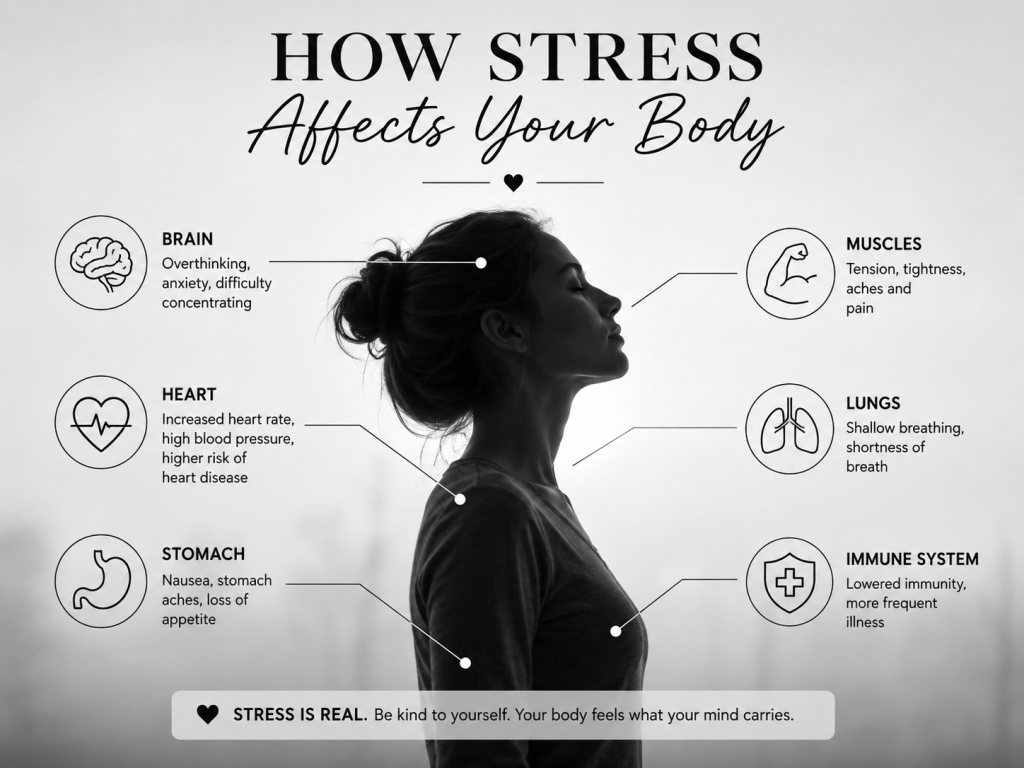
Stress can influence your brain, body, sleep, energy, digestion, muscles, and overall wellbeing.
For people living with a brain injury, understanding how stress affects the body can be especially helpful. Learning to recognize your body’s signals may help you know when it’s time to slow down and take care of yourself.
🧠 What Happens When You Feel Stressed?
When your brain senses stress, your body can enter a “fight, flight, or freeze” response.
Your body prepares to deal with what it perceives as a threat.
You may notice:
💓 A faster heartbeat
😮💨 Changes in breathing
💪 Tight or tense muscles
💦 Increased sweating
🧠 Difficulty thinking clearly
These reactions can be useful for short periods, but staying in a heightened state of stress for too long can leave you feeling exhausted.
🤕 Stress Can Affect Your Head
Stress may contribute to physical symptoms such as:
🤕 Headaches
💭 Brain fog
🧠 Difficulty concentrating
😣 Feeling mentally overwhelmed
For someone recovering from a brain injury, these symptoms may make an already difficult day feel even more challenging.
💪 Stress Can Create Muscle Tension
When you’re stressed, your muscles may become tense without you realizing it.
You might notice:
💪 Tight shoulders
😬 A clenched jaw
🪑 Neck tension
🤕 Muscle aches
Gentle stretching, movement, breathing exercises, and taking breaks may help your body relax.
😴 Stress Can Affect Sleep
Stress and sleep can affect each other.
When you’re stressed, you may have trouble:
🌙 Falling asleep
😴 Staying asleep
💭 Quieting your thoughts
You may then feel more tired the next day, which can make it harder to manage stress.
Creating a calming bedtime routine can help support better rest.
❤️ Stress Can Affect Your Emotions
Stress doesn’t only create physical sensations.
You may also experience:
😠 Irritability
😟 Anxiety
😣 Frustration
😔 Sadness
💭 Racing thoughts
When your stress level rises, even small problems may feel much bigger.
🍽️ Stress Can Affect Digestion
Stress can also affect your digestive system.
Some people may notice:
🤢 Nausea
🍽️ Changes in appetite
😣 Stomach discomfort
Your body and brain are closely connected, so emotional stress can sometimes show up as physical discomfort.
🔋 Stress Can Drain Your Energy
Stress requires energy.
When your body remains tense or alert for long periods, you may eventually feel:
😴 Tired
💭 Mentally drained
😣 Overwhelmed
🔋 Low on energy
This can be especially difficult when you’re already managing brain injury fatigue.
Learning to recognize when your “battery” is getting low can help you decide when it’s time to rest.
🌱 Notice Your Body’s Warning Signs
Your body may give you clues that your stress level is rising.
Try asking yourself:
💭 What am I feeling?
🧠 What am I thinking?
💪 Where am I holding tension?
😴 Am I becoming tired?
❤️ What do I need right now?
You don’t have to wait until you’re completely overwhelmed before taking a break.
🧘 Simple Ways to Manage Stress
Small moments of self-care can help you create space between yourself and stressful situations.
Try:
🫁 Taking slow, comfortable breaths
🚶 Going for a gentle walk
🌿 Spending time somewhere quiet
🎵 Listening to calming music
📵 Taking a break from screens
💬 Talking with someone you trust
😴 Getting enough rest
You don’t have to do everything.
Choose what feels manageable for you.
💜 Be Kind to Yourself
Stress isn’t a sign that you’re failing.
Your body is trying to protect you.
Instead of criticizing yourself when you feel overwhelmed, try saying:
“My body is telling me that I need a break.”
Then give yourself permission to pause.
✨ Final Thoughts
Stress can affect the whole body – not just the mind.
Learning to recognize the physical and emotional signs of stress can help you respond earlier and give yourself the care you need.
🧠 Notice your thoughts.
💪 Listen to your body.
🫁 Take a breath.
⏸️ Give yourself permission to pause.
🌱 Take care of yourself one moment at a time.
If stress is persistent, severe or interfering with your daily life, consider talking with a healthcare professional who can help you find appropriate support.


Do you Love Love YOUR Brain?