
Living with a brain injury can change the way you experience energy.
You may wake up feeling rested and still become exhausted after a few simple activities. A conversation, a trip to the store, working on a computer, or concentrating on a task can use more energy than you expect.
This can feel confusing – especially when other people can’t see how much effort your brain is using.
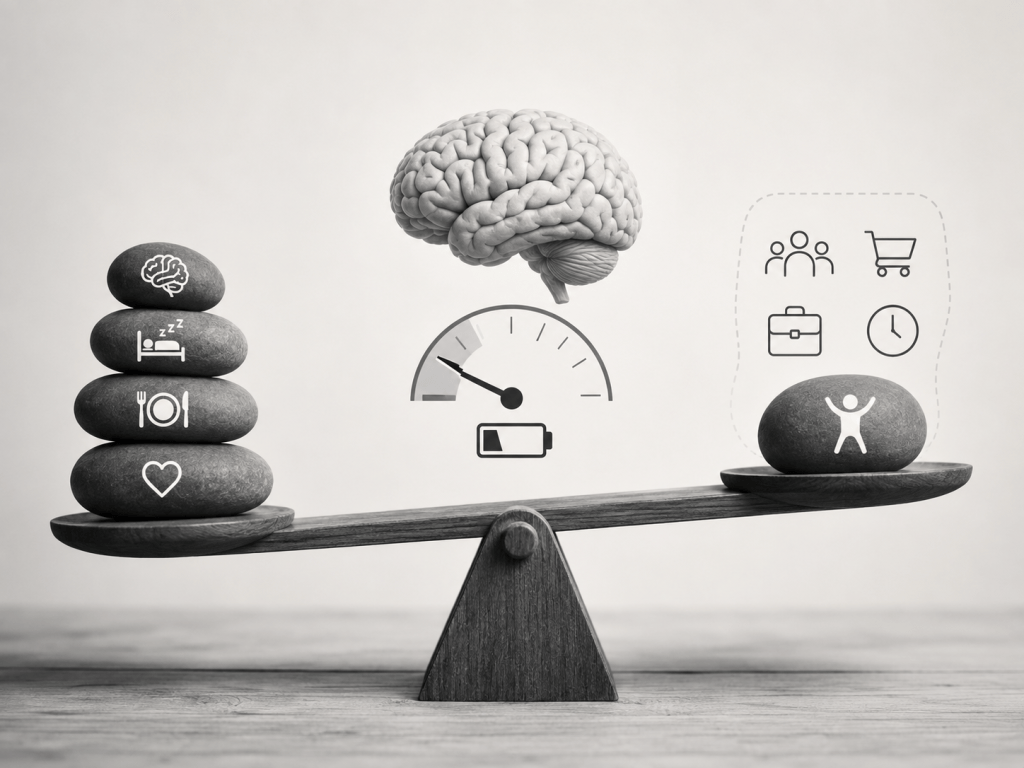
Think of your daily energy as a limited budget.
Every activity costs something.
And learning how to spend that energy wisely can make everyday life more manageable.
🔋 Your Brain Has an Energy Budget
Imagine waking up each morning with a certain amount of energy.
You might use some of it for:
🧠 Thinking
💬 Talking
💻 Working
🚗 Driving
🛒 Shopping
📱 Using screens
🚶 Moving around
❤️ Managing emotions
Even activities that don’t look physically difficult can require significant mental energy.
After a brain injury, your brain may need to work harder to process information and complete everyday tasks.
That means your energy budget may feel smaller than it used to.
📉 Your Energy Can Change Throughout the Day
Your energy isn’t necessarily consistent.
You may have:
🌞 More energy in the morning
🍽️ Less energy after several activities
🌙 Very little energy by evening
And tomorrow may be completely different.
Some days may feel productive.
Other days may require more rest.
This fluctuation doesn’t mean you’re failing.
It’s part of learning how your brain works now.
💭 Mental Activities Use Energy Too
You don’t have to be physically active to become exhausted.
Your brain can become tired from:
📖 Reading
💻 Looking at a screen
🧩 Solving problems
💬 Having long conversations
📋 Making decisions
🔊 Processing lots of sounds
👥 Being around crowds
📝 Trying to remember information
Sometimes you may need to rest even when your body hasn’t done much physical activity.
That’s because mental effort is still effort.
⚡ What Can Drain Your Energy?
Your personal energy drains may be different from someone else’s.
Common examples include:
😴 Poor sleep
😣 Stress
🔊 Loud environments
💡 Bright or uncomfortable lighting
📱 Too much screen time
🧠 Multitasking
💬 Social activities
🚗 Driving
📋 Too many tasks in one day
Learning your own triggers can help you manage your energy more effectively.
🌱 Learn to Pace Yourself
Pacing means spreading your energy throughout the day instead of using everything at once.
Try:
⏸️ Taking regular breaks
🧩 Breaking large tasks into smaller steps
📅 Planning demanding activities carefully
🔄 Alternating difficult and easier activities
🛑 Stopping before you become completely exhausted
You don’t have to wait until your battery reaches zero before you recharge.
🎯 Prioritize What Matters Most
When your energy is limited, you may not be able to do everything.
Ask yourself:
“What matters most today?”
Maybe it’s:
💼 Completing an important work task
🍽️ Preparing a meal
👨👩👧 Spending time with family
🚶 Going for a walk
🩺 Attending an appointment
Choose where your energy is most valuable.
It’s okay to let less important things wait.
🛑 Learn Your Warning Signs
Your body and brain may tell you when your energy is running low.
Watch for:
🤕 Headaches
💭 Brain fog
😴 Increasing fatigue
😣 Irritability
😵 Dizziness
🔊 Increased sensitivity to noise
📖 Difficulty concentrating
When these signs appear, consider it a message – not a failure.
Your brain may be saying:
“I need a break.”
💜 Rest Before You Crash
One of the most important parts of energy management is learning to rest before you’re completely exhausted.
Rest can mean:
🛋️ Sitting somewhere quiet
😴 Taking a nap when appropriate
📵 Stepping away from screens
🔇 Reducing noise
🫁 Taking a few slow breaths
🌿 Spending time in a calm environment
Rest isn’t wasted time.
Rest is how you recharge your energy budget.
🤝 Help Others Understand
People may not understand why you need to cancel plans, leave early, or take frequent breaks.
You can explain:
💬 “My energy is limited today.”
💬 “I need a quiet break.”
💬 “I can do this, but I need to take my time.”
💬 “I’m reaching my limit and need to rest.”
You don’t have to justify every need.
Your energy is yours to manage.
🌼 Some Days Will Be Different
You may have a day when you accomplish a lot.
The next day, you may need much more rest.
That doesn’t mean you’ve gone backward.
Recovery isn’t always predictable.
🌱 Good days are worth celebrating.
💜 Difficult days deserve compassion.
Both are part of the journey.
✨ Final Thoughts
Living with brain injury can mean learning a new energy economy.
Your energy is valuable.
Spend it intentionally.
Protect it when you can.
Recharge when you need to.
And remember:
🔋 You don’t have to use all your energy just because you have it today.
🌱 Pacing yourself isn’t giving up.
💜 Rest isn’t laziness.
🧠 Managing your energy is part of taking care of your brain.
Your goal isn’t to do everything.
It’s to have enough energy for the things that matter most.


Do you Love Love YOUR Brain?