
After a traumatic brain injury, movement may not always feel the way it did before.
Walking may require more concentration.
Balance may feel less reliable.
Strength may need to be rebuilt.
Certain movements may feel unfamiliar.
Even everyday activities can require more effort.
This is where rehabilitation can become an important part of the recovery journey.
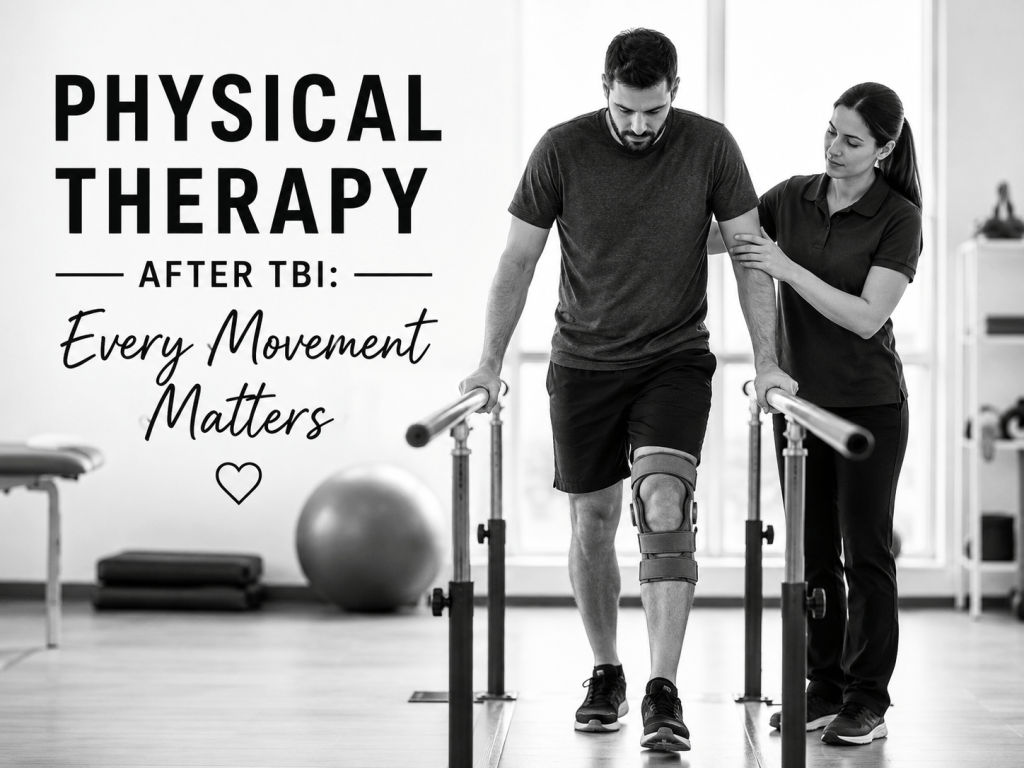
Physical therapy isn’t simply about exercising. It’s about helping a person work toward safer, more functional movement.
🧠 How TBI Can Affect Movement
Brain injury can affect different abilities involved in movement and coordination.
A survivor may experience challenges with:
🚶 Walking
⚖️ Balance
💪 Strength
🤸 Coordination
🧭 Spatial awareness
🔄 Movement patterns
🔋 Physical endurance
These challenges can vary greatly from person to person.
That’s why rehabilitation needs to be individualized.
💪 Physical Therapy Can Support Recovery
Physical therapy may focus on helping a person improve or maintain abilities such as:
🚶 Mobility
⚖️ Balance
💪 Strength
🤸 Coordination
🪑 Transfers and positioning
🏡 Functional everyday movement
The specific exercises and techniques used will depend on the individual’s needs and rehabilitation plan.
🌱 Progress Can Start With Small Movements
Recovery doesn’t always begin with a major milestone.
Sometimes progress looks like:
🪑 Sitting with better control
🚶 Taking a few more steps
⚖️ Improving balance
💪 Building strength
🔄 Practicing a movement repeatedly
⏳ Increasing endurance gradually
These changes may seem small to someone watching from the outside.
For a survivor, they can represent significant effort.
Every movement can matter.
🔄 Repetition Can Be Part of Learning
Rehabilitation often involves practicing movements repeatedly.
The goal isn’t necessarily to perform everything perfectly on the first attempt.
It can be about giving the brain and body opportunities to practice.
Again.
And again.
And again.
🧠 Practice can help build familiarity and confidence with movement.
The pace will be different for every person.
🏡 Rehabilitation Can Connect to Everyday Life
Physical therapy isn’t only about what happens during a therapy session.
The skills practiced during rehabilitation may relate to everyday activities such as:
🚶 Moving around the home
🪑 Getting up from a chair
🛏️ Moving in and out of bed
🚿 Navigating daily routines
🛒 Getting around safely
🏡 Participating in activities at home
The ultimate goal is often to help a person participate more safely and comfortably in daily life.
⏸️ Listen to Your Body
Recovery requires effort, but that doesn’t mean pushing through everything.
Fatigue can be an important consideration after TBI.
If you’re working with a rehabilitation professional, communicate how you’re feeling.
Let them know about:
😴 Fatigue
🤕 Pain
💭 Brain fog
😵 Dizziness
⚖️ Balance difficulties
😣 Increased symptoms
Your rehabilitation plan should be appropriate for your individual situation.
❤️ Celebrate the Effort
Sometimes people only celebrate the final result.
But survivors know that the effort leading up to that result matters too.
Showing up for therapy.
Trying a difficult movement.
Practicing again after a frustrating day.
Taking a break when needed.
Coming back and trying again.
These are all parts of the journey.
🌱 Progress is not always measured by how far you can go.
Sometimes it’s measured by the fact that you keep trying.
🤝 Rehabilitation Is a Team Effort
A survivor doesn’t have to navigate recovery alone.
Depending on individual needs, rehabilitation may involve different professionals working together.
The survivor and their support system can also play an important role.
Communication matters.
Questions matter.
Preferences matter.
And the survivor’s goals should remain part of the conversation.
💜 Recovery Has Its Own Timeline
It can be tempting to compare your progress with someone else’s.
But no two brain injuries are exactly alike.
One person may progress quickly in one area while needing more time in another.
Another person may have a completely different experience.
Try not to measure your journey against someone else’s.
Your recovery is your own.
✨ Final Thoughts
Physical therapy can be an important part of life after TBI.
It can provide opportunities to practice movement, build strength, improve balance, work on coordination, and develop strategies for everyday activities.
But recovery isn’t about doing everything perfectly.
It’s about continuing to work with the abilities you have today.
💪 Move when you can.
⏸️ Rest when you need to.
🧠 Listen to your body and brain.
🌱 Celebrate small improvements.
❤️ Give yourself time.
Every step may not feel like progress.
Every session may not feel successful.
But sometimes recovery is simply about showing up, trying again, and taking one movement at a time.


Do you Love Love YOUR Brain?