
Have you noticed changes in your ability to focus, remember things, or stay organized after a concussion or traumatic brain injury (TBI)?
You might experience symptoms that look very similar to ADHD, even if you never had ADHD before your accident.
An article from Cognitive FX, updated October 14, 2026, explains how concussions and traumatic brain injuries can affect attention and executive functioning. It also highlights why understanding the difference between ADHD and brain injury is important.
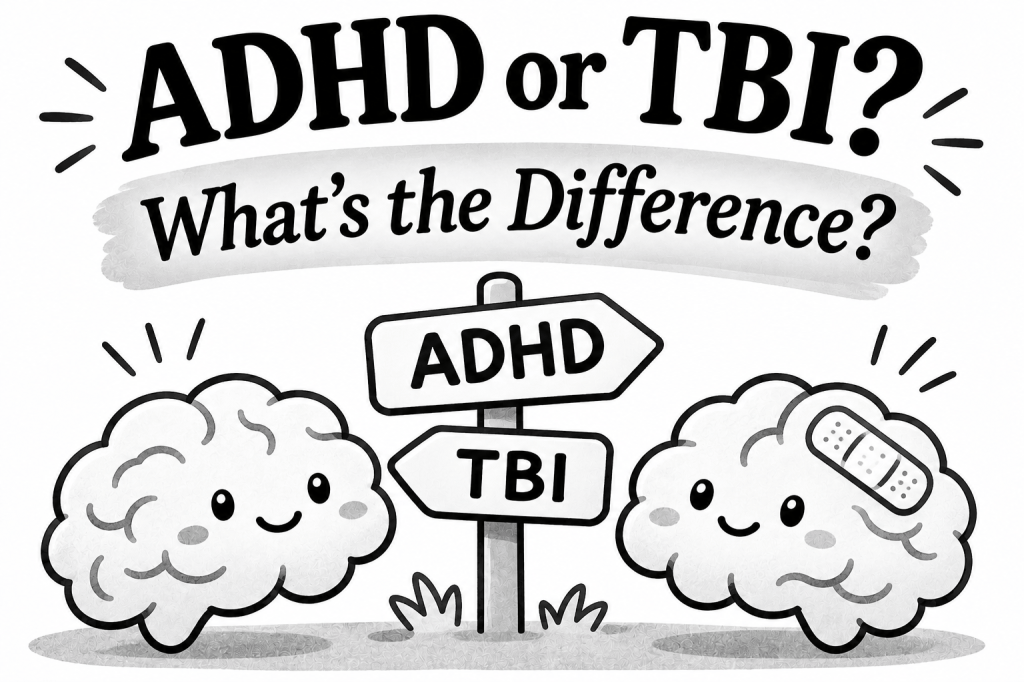
🧠 ADHD and Brain Injury: What’s the Difference?
ADHD usually begins during childhood. However, attention difficulties related to a traumatic brain injury may appear after an accident or concussion.
Some people may also have both ADHD and a brain injury.
The timing of symptoms can provide an important clue. If difficulties with attention, memory, or organization started after an accident, they may be related to the injury.
However, symptoms alone cannot confirm the cause. A qualified healthcare professional can help evaluate your history and symptoms.
🔍 Symptoms That Can Look Similar
ADHD and TBI can affect some of the same areas of daily life.
According to Cognitive FX, overlapping symptoms may include:
🧠 Difficulty concentrating
🦋 Becoming easily distracted
📝 Forgetfulness
🔄 Trouble switching between tasks
🗣️ Difficulty following conversations
😤 Impulsivity and emotional outbursts
😴 Mental exhaustion
🌪️ Feeling overwhelmed by noise, light, or other stimulation
Experiencing these symptoms does not automatically mean you have ADHD.
A brain injury can affect how you process information, manage tasks, and respond to your surroundings.
❓ Three Questions to Discuss With Your Doctor
If you are experiencing ADHD-like symptoms after a brain injury, these questions may help guide a conversation with your healthcare provider.
1. When did the symptoms begin?
Did you experience attention and memory difficulties before your accident, or did they appear afterward?
The timeline can help your healthcare provider understand whether the changes may be related to your injury.
2. Are you experiencing other brain injury symptoms?
Symptoms such as dizziness, headaches, fatigue, balance problems, and brain fog may also occur after a concussion.
Sharing all your symptoms can help your healthcare provider get a clearer picture of what you are experiencing.
3. What happens when you take ADHD medication?
Some people with TBI may experience improved attention with stimulant medication, while others may experience side effects or feel worse afterward.
However, responding to ADHD medication does not prove that someone has ADHD. Medication decisions should be made with a qualified healthcare professional who understands your medical history.
🌱 Strategies That May Help
Different approaches may help people manage attention, memory, and emotional difficulties after a brain injury.
The right approach depends on the individual and should be discussed with appropriate healthcare professionals.
Some options mentioned by Cognitive FX include:
🧘 Mindfulness: Practicing ways to calm and focus your attention.
🧩 Cognitive therapy: Working on attention, memory, and organization skills.
❤️ Cognitive behavioral therapy (CBT): Learning strategies to manage emotions and cope with difficult thoughts.
🎨 Creativity: Exploring activities such as art, music, dancing, or writing.
🚶 Physical rehabilitation: Addressing balance, movement, and other physical difficulties.
💊 Medication: Discussing possible benefits and risks with your doctor.
Not every strategy works for everyone. It may take time and professional guidance to find what supports your needs.
💡 The Most Important Message
ADHD and traumatic brain injury are different conditions, but some of their symptoms can look alike.
A concussion may lead to new attention difficulties or make existing ADHD symptoms more challenging.
Understanding when your symptoms began and how they affect your daily life can help your healthcare team determine what kind of evaluation and support may be appropriate.
💗 Love Love Brain Golden Nugget
A brain injury can change how you focus, remember, organize, and manage your emotions.
These changes are not simply a lack of motivation or effort.
If you are struggling with attention or memory after an accident, your experience deserves to be taken seriously. You do not have to blame yourself for difficulties that may be connected to your injury.
Understanding your brain is an important step toward finding the support and strategies that work for you. 💗
💬 We’d Love to Hear From You
Have you noticed changes in your attention, memory, or ability to stay organized after a concussion or brain injury?
What strategies have helped you manage these challenges?
Share your experience in the comments. Your story may help someone else feel understood and less alone.
📱 Follow and Support Love Love Brain
If this message speaks to you, please support Love Love Brain by following us on social media. 💗
Stay connected for more stories, reflections, helpful information, and supportive content about brain injury, recovery, resilience, and everyday life.
Click the buttons below to follow and support us on social media:
Note: This article is based on information from Cognitive FX and is intended for education and support, not medical advice. ADHD-like symptoms can have different causes. Please consult a qualified healthcare professional for an individual evaluation and treatment recommendations.
Source: Cognitive FX: Concussions and Attention Deficit Disorder


Do you Love Love YOUR Brain?