
Living with a traumatic brain injury can feel lonely, especially when the people around you do not fully understand what you are going through.
In this special New Year gathering, Adeline brings together members of the TBI Thrivers community for an honest and uplifting conversation about life after brain injury.
They share their experiences, talk about their hopes for the future, and remind one another that even small steps can make a difference.
Most importantly, they create a space where people can feel understood, supported, and accepted without judgment.
💗 Finding People Who Understand
One of the biggest themes of the conversation is the importance of connecting with others who understand life after a brain injury.
Some participants share that it can be difficult to explain their struggles to family members or friends who have not experienced TBI.
They may look fine on the outside, but inside they are dealing with fatigue, memory problems, emotional changes, and other challenges.
As one participant explains, sometimes people are not looking for sympathy. They simply want understanding.
Adeline agrees that there can be a special sense of safety within the TBI community.
People can share their experiences without feeling that they have to explain every little thing.
Sometimes, being around people who understand makes us feel less alone.
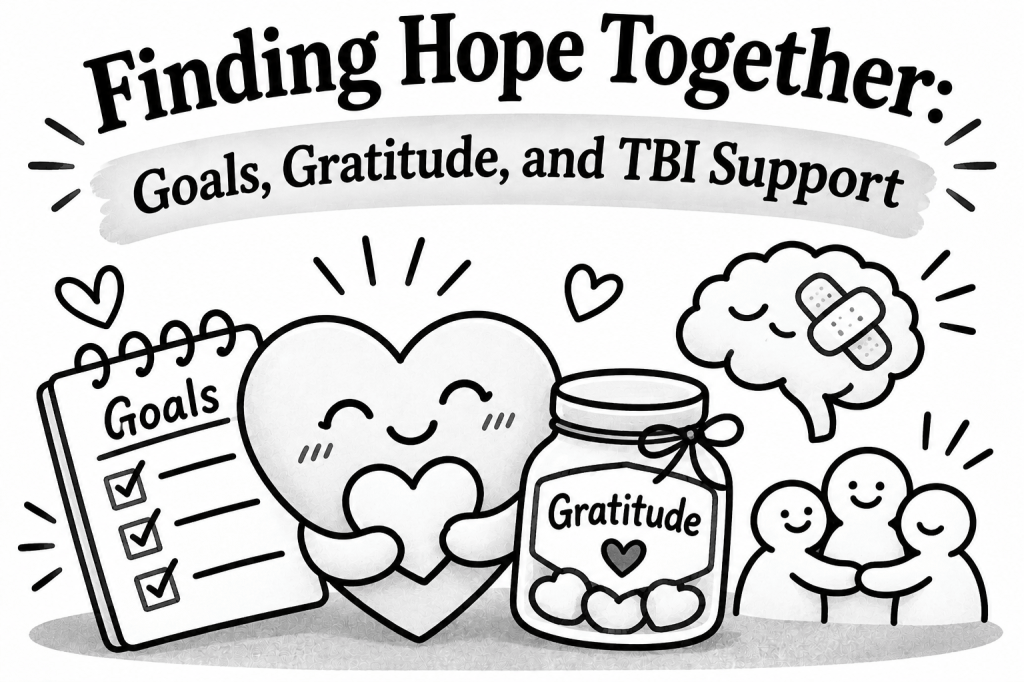
🌱 Setting Goals One Step at a Time
Adeline asks everyone an important question:
If we meet again 12 months from now, what is one realistic goal you would like to achieve?
Each person shares something meaningful.
Some goals include:
🎓 Completing a college certificate.
📖 Publishing a personal story or book.
👨👩👧 Building stronger family relationships.
🌱 Continuing physical recovery.
🏡 Finding a stable home.
🌻 Growing personally and learning new skills.
🤝 Developing a project that helps people in need.
The goals are different, but they share something important: each person wants to keep moving forward.
Adeline encourages everyone to focus on goals they can influence rather than things outside their control.
She also reminds the group that progress does not have to happen all at once.
🧩 Small Steps Can Lead to Progress
Adeline shares an idea from the book Atomic Habits: small improvements can add up over time.
She encourages participants to take one step each day toward their goals.
Some examples from the conversation include:
✍️ Writing in a journal.
📅 Using a calendar to stay organized.
📚 Working on a book a little at a time.
💬 Contacting someone who can offer guidance.
🌱 Taking the first step toward a new project.
If a day does not go as planned, that does not mean the goal is lost.
You can begin again the next day.
You do not have to do everything today. Just take one manageable step.
❤️ Helping Others Through Community
One especially inspiring moment comes when a participant shares an idea called The Spice of Life.
The goal is to collect unused herbs and spices and give them to people who need help making their meals more enjoyable.
The idea also includes sharing simple recipes so people know how to use the donated spices.
Adeline sees the potential in this project and helps break the big idea into smaller steps.
They discuss finding a domain name, creating a simple website, connecting with local churches and food banks, and looking for a mentor.
Other members offer to contribute spices and help develop the idea.
It becomes a beautiful example of how a personal dream can grow into something that benefits an entire community.
🤝 Taking Responsibility While Asking for Support
The group also discusses the challenges of relationships after brain injury.
Adeline and the participants recognize that TBI can affect emotions, communication, and relationships with family and friends.
One important reminder from Adeline is that taking responsibility does not mean accepting mistreatment.
People living with brain injuries deserve patience, understanding, and safety.
Sometimes we may need to look at our own reactions and find ways to manage difficult situations. At other times, we may need boundaries or additional support from people who understand brain injury.
We can work on ourselves while also recognizing that we deserve kindness from others.
🌸 Practicing Gratitude
Toward the end of the gathering, Adeline invites everyone to share one thing they love about someone in their lives.
Participants talk about their spouses, parents, children, relatives, and friends.
They express gratitude for the people who have stayed beside them through difficult times.
One participant also shares a simple idea called a gratitude jar.
Each day, write something you are thankful for on a small piece of paper and place it in a jar.
It does not have to be something big.
It could be:
🚪 Someone holding the door open for you.
💌 A kind message from a friend.
🌅 A beautiful sunset.
🐾 A pet keeping you company.
😊 A small moment that made you smile.
On difficult days, it may be harder to find something to appreciate. That is okay. Start with whatever feels meaningful to you.
💗 Love Love Brain Thoughts
This gathering reminds us that life after brain injury is not something we have to navigate alone.
We may have different challenges, different abilities, and different goals. But we can still learn from one another, celebrate progress, and create meaningful connections.
A few reminders from the conversation:
🤝 Find people who understand your experience.
🎯 Set goals that feel realistic for you.
🪜 Break big goals into smaller steps.
🙋 Ask for help when you need it.
🛌 Give yourself permission to rest.
🌷 Practice gratitude in small ways.
💗 Remember that you still have something meaningful to share with the world.
A brain injury may change parts of our lives, but we can continue building new connections, discovering new possibilities, and finding ways to contribute.
💬 We’d Love to Hear From You
What is one realistic goal you would like to work toward over the next 12 months?
What helps you feel understood and supported after brain injury?
Share your thoughts in the comments. Your story may encourage someone else in the TBI community. 💗
🎥 Watch the Video
Join Adeline and the TBI Thrivers for a conversation about community, personal goals, gratitude, and finding hope after brain injury.
📱 Follow and Support Love Love Brain
If this message speaks to you, please support Love Love Brain by following us on social media. 💗
Stay connected for more stories, reflections, helpful information, and supportive content about brain injury, recovery, resilience, and everyday life.
Click the buttons below to follow and support us on social media:
Note: This article shares personal experiences and reflections from a community conversation. It is for education and support, not medical advice. Every brain injury and recovery journey is different.


Do you Love Love YOUR Brain?